
Engulfing Trading Strategy: (Statistics, Facts, & Historical Backtest)
There are different ways traders analyze the markets to find trading opportunities. While some use indicators, others study the price movements and the patterns made by candlesticks. One common candlestick pattern is the engulfing pattern. What is the engulfing trading strategy?
The engulfing trading strategy is a price action trading method that uses the engulfing candlestick pattern to find trading opportunities. It is a reversal candlestick pattern that consists of two candlesticks, with the second candlestick consuming (engulfing) the first one.
In this post, we take a look at the engulfing candlestick pattern. We present you with an engulfing trading strategy at the end of the article.
What is engulfing strategy?
The engulfing trading strategy is a price action trading method that uses the engulfing candlestick pattern to find trading opportunities. It is a reversal candlestick pattern that consists of two candlesticks, with the second candlestick consuming (engulfing) the first one.
Usually, it is the body of the second candlestick that completely engulfs the body of the first candlestick, but the range (body plus upper and lower wicks) of the second candle may also consume that of the first bar. A more powerful variant of the engulfing pattern — known as the outside bar (the opposite of an inside bar)— is formed when the body of the second candlestick completely engulfs the entire range of the first candlestick. The outside bar pattern is called a reversal day on the daily chart.
The significance of the engulfing pattern depends on where it occurs in the context of price movements — after a rally or a decline — and whether there is a support/resistance level there, which would favor a price reversal.
As you know, a support level lies below the current price and could mark a reversal from a downswing to an upswing, while the resistance level lies above the current price and could mark the reversal from an upswing to a downswing. An engulfing pattern occurring around a resistance/support is more likely to bring about a price reversal.
What timeframe is best for the engulfing candle?
You may think that candlestick patterns work well on all timeframes, but that is not really true. At least, not from our assessment of backtested results. Generally, candlestick patterns work better in some timeframes than in others.
From an assessment of backtested results, the best timeframe for trading candlestick patterns, including the engulfing candlestick pattern, is the daily timeframe, with relatively short holding periods of about one to ten days. As such, the engulfing pattern is most useful for short-term trading.
Types of engulfing candlestick
Based on the arrangement of the two candlesticks that make up the pattern and where the pattern forms, the engulfing candlestick pattern is classified into two:
- Bullish engulfing
- Bearish engulfing
The bullish engulfing pattern
A bullish engulfing candlestick pattern is formed by two candlesticks, as follows:
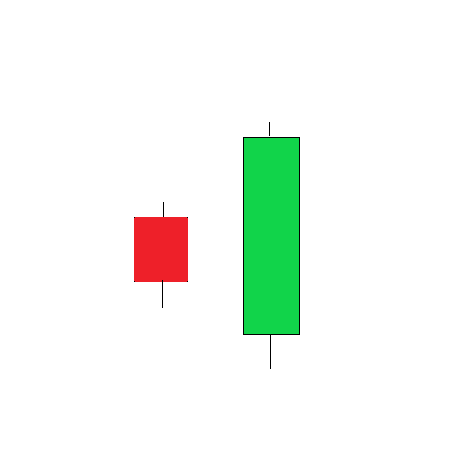
- The first candlestick is bearish (red/black)
- The second candlestick is bullish completely and engulfs the body of the first candlestick
Being a bullish reversal pattern, you look for it after the market has made a downswing, which is the bearish trend to reverse to the bullish side.
A bullish engulfing pattern represents the victory of the bulls over the bears. Let’s take a look at how the pattern forms:
The first candle is bearish, in line with the downswing preceding it. So, it seems like the bears are still in control. Then, the market gaps down to open for the next candle, implying that the bears are still in charge. However, sometime during the intraday session, the bulls gain strength and push the price higher, making the candle close higher than the open of the preceding bearish candle. It shows that the bulls have taken control of the trading session.
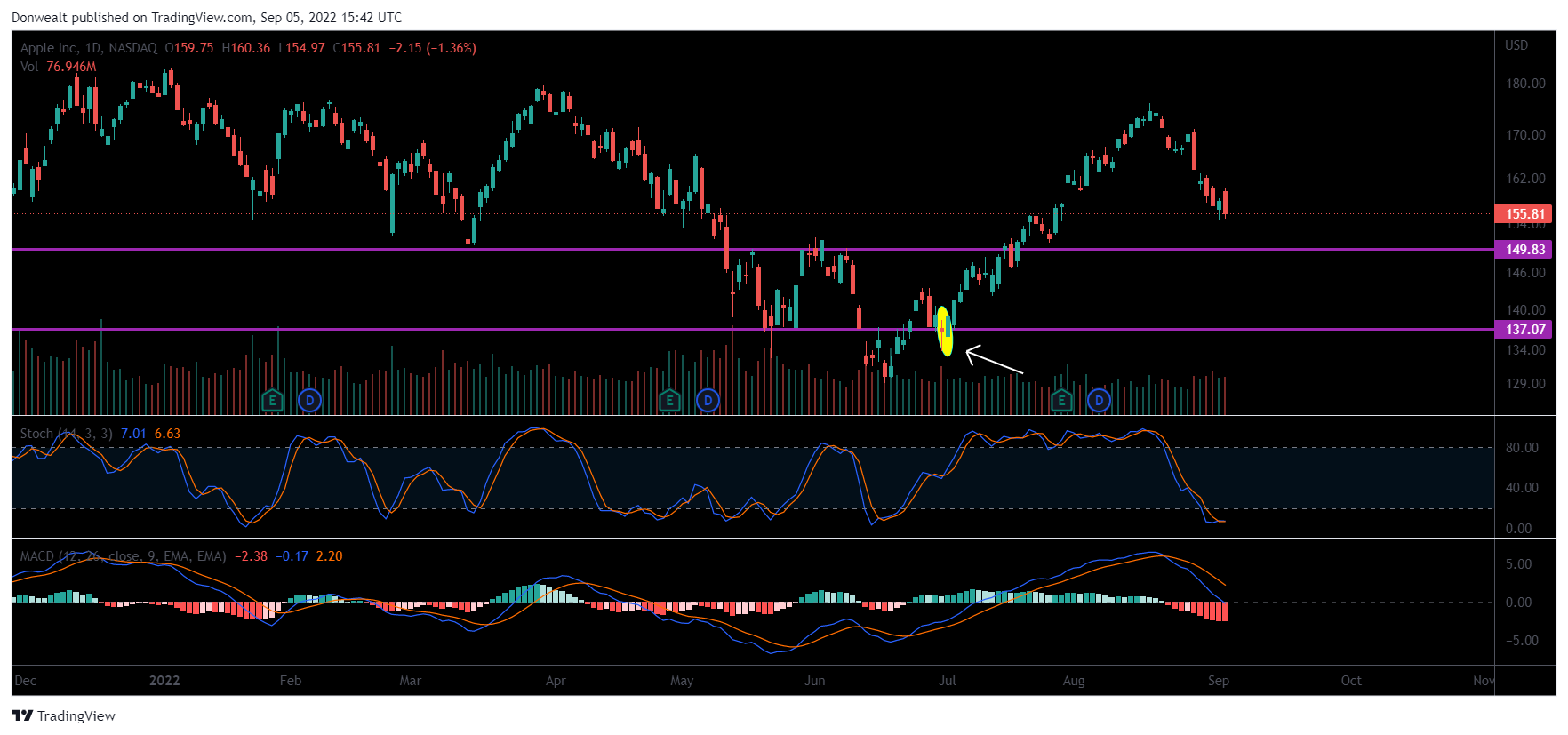
Below is an example of a bullish engulfing candlestick pattern that is followed by a few days with very strong performance:
The bearish engulfing pattern
A bearish engulfing