
Gain Per Trading Day and Day of the Week Since 1970 in S&P 500 – Analyzing Patterns
Do you know the average return in the S&P 500 separated into trading days and day of the week?
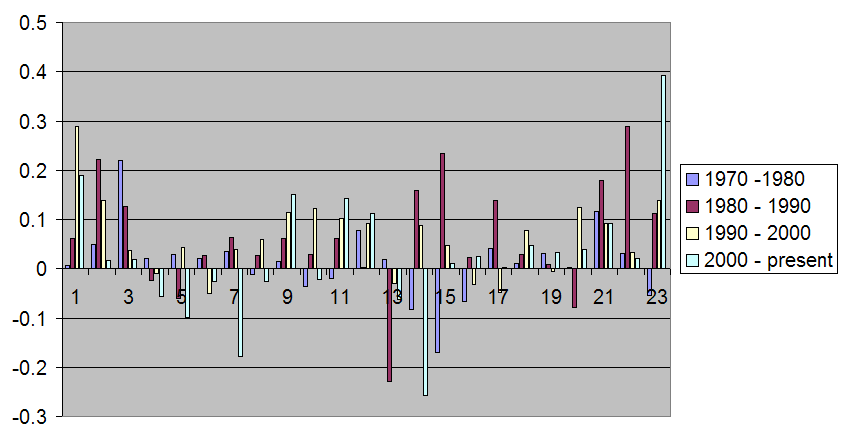
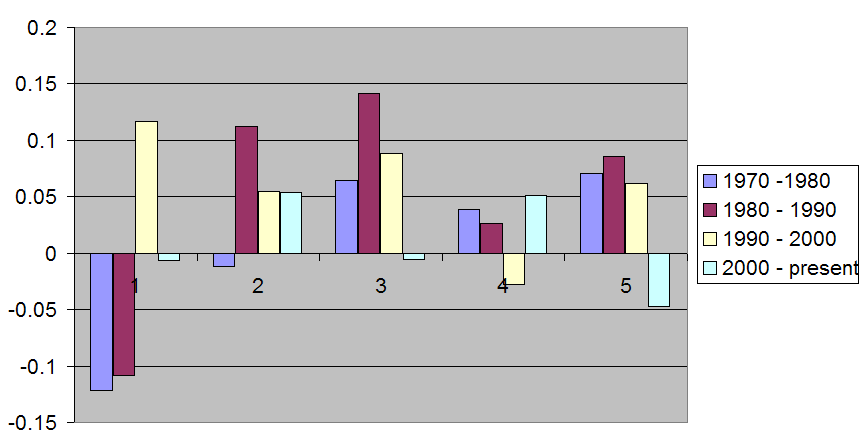
In this article, we look at the average gain per trading day and day of the week. The best days are centered around the first and last days of the month. We also find out that the best trading days are Tuesdays and Wednesdays, something which might explain the “Monday reversal”.
Let’s start by measuring the trading day of the month:
The average gain per trading day of the month
Below you can find a bar showing the average return per trading day in the S&P 500 since 1970, excluding dividends.
Day 1 is simply the first trading day, not necessarily the 1st day of the calendar month.
Obviously, the months have a different number of trading days. The numbers are not compressed or prolonged to adjust for that. Sometimes day 20 is the last trading day of the month, in another month it could be the 21st.
The average gain per day of week
Looking at weekdays we get this bar chart (1 is Mondays and the gain is from the close on Friday until the close on Monday):
FAQ:
– What is the significance of separating the average return in the S&P 500 into trading days of the month?
Separating the average return into trading days of the month helps identify patterns and trends in the stock market that may be associated with specific days of the month, which can be valuable for traders and investors.
– Are there specific days of the week that stand out with higher average returns in the S&P 500?
Yes, the best trading days of the week are Tuesdays and Wednesdays, as indicated by the data. This observation may help explain the phenomenon known as the “Monday reversal” and guide trading strategies.
– What is the significance of considering the number of trading days in a month when analyzing average returns?
Different months have varying numbers of trading days. It’s important to note that the data presented is not adjusted for this variation, which means that some months may have more trading days than others.