
Order Flow Trading Strategy – What Is It? (Backtest Analysis Data and Insights)
For most retail traders, trading is mostly about technical analysis using trading indicators applied to a price to look at the current forces in the market. While technical indicators may play a significant role in trading, professional day traders don’t always depend on them. One of the most important tools in a professional trader’s toolbox is order flow. What are order flow trading strategies?
An order flow trading strategy is a method of trading that is based mainly on watching the flow of trading orders and the impact those have on the current price of an asset. With this strategy, the aim is to anticipate future price movement by analyzing the orders coming into the market. Trading based on order flow analysis will help you to see and understand how other traders are doing their trades.
In this post, we take a look at the order flow trading strategy. At the end of the article, we backtest the strategy.

What is order flow?
Order flow refers to the amount of limit buy and sell orders waiting to be executed at different price levels. As you may already know, every exchange maintains an electronic record of buy and sell limit orders that come in for any given instrument. You can see those orders on the DOM (depth of market) window of the exchange’s platform.
In the DOM window, also known as the order book, limit orders placed by traders are arranged by the exchange on a price-time priority, such that the best prices are kept at the top, as follows:
- On the bid (buy limit orders) side, prices are arranged from highest to lowest and according to the time the orders came in.
- On the ask (sell limit orders) side, prices are arranged from lowest to highest and according to time.
See the picture of the Binance order book for BTC/USDT below:
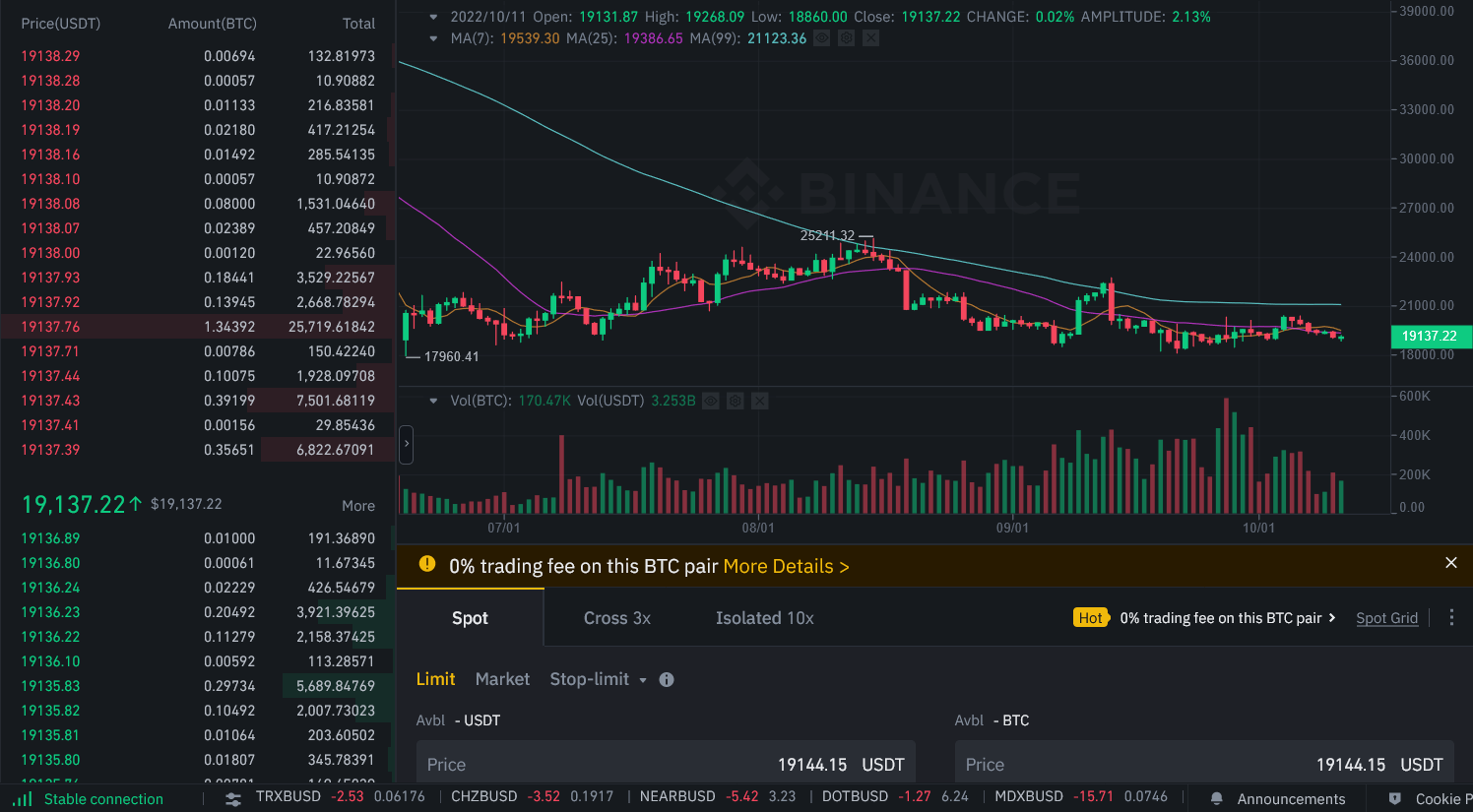
You can see the order book on the left side: the red numbers at the top are sell limit orders, arranged from the lowest ask prices to the highest, while the green numbers at the bottom are the buy limit orders arranged from the highest bid prices to the lowest.
With the right skills, you can learn a lot from a DOM (Depth of Market) window — the price ranges, what prices are attracting more or fewer traders, and so on. You can also see the disappearance of buyers or sellers at a certain price level, and with that, you can have a better overview of the correction movement in a trend.
Recommended Reading: Imbalance Trading Strategy
Watching the flow of trading orders and their subsequent impact on the price movement is called order flow analysis. In other words, order flow analysis allows you to see how other market participants are trading (buying or selling) and how their activities move the price.
An order flow chart will show you exactly how many buy and sell market orders were executed at each price level. Analyzing the order flow helps you recognize the final details of the buying and selling volume. It’s a microscopic look into the price movement that is represented on the price bar or candlestick.
The order can show supply and demand imbalances. So, by watching the changes in order flow, you can see the imbalance and be able to predict short-term price changes. If you are a day trader or a scalper, you can trade based on the limit order books by tracking the order flow.
For example, if huge sell orders are coming in at lower prices, and no corresponding volume is coming on the buy side or they are coming at lower prices, there’s a huge chance the price would drop.
What is an order flow trading strategy?
An order flow trading strategy is a trading method based mainly on watching the flow of trading orders and the impact those have on the current price of an asset. It is one more tool used by professional traders in addition to other popular forms of market/trading analysis such as technical analysis, sentiment analysis, and fundamental analysis. Order flow trading is sometimes referred to as a form of volume trading because it is based on the volume of orders coming into the market.
Better than the other forms of analysis for short-term trading, order flow analysis can help you predict with a good amount of certainty where an order imbalance awaits at a future price level. This can allow you to enter the market with precision and more confidence. The order flow trading strategy aims to anticipate future price movement by analyzing the orders coming into the market. Trading based on order flow analysis will help you to see and understand how other traders are doing their trades.
The order flow chart will show us exactly how many buy and sell orders are happening in the market at each price level. By watching the Order Book and also footprint charts, you see the subsequent impact on the price of the market by these orders and therefore make predictions on the future price and direction of the market. If you are a short-term trader, such as a scalper or day trader, you can use the order flow analysis to enter the market accurately based on recently executed buy and sell orders.
Order flow analysis allows you to see what types of orders are being placed at a certain time in the market. For example, you can see the amount of buy and sell orders at a given price point and be able to determine which side the balance tips. Here is the thing: when the price is rising upward in a very strong rally, you would know for certain that it will eventually stop somewhere. The rally happens because there are fewer sell orders a