
Wedge Trading Strategy: Backtest And Example
When it comes to price action trading, recognizing chart patterns on the chart may be the most important skill. While there are many chart patterns, the wedge pattern is one of the most reliable. Want to know about wedge trading strategy?
The wedge trading strategy is a price action trading method that focuses on the wedge chart pattern — a wedge-shaped price structure that forms when the price bars lie between two converging but ascending or descending trend lines. Although sloped in the same direction, one trendline has a greater slope than the other. There are two types of wedges: the rising wedge and the falling wedge.
In this post, we answer some questions about the wedge trading strategy, and we make a backtest.
Introduction to Wedge Trading Strategy
The wedge trading strategy is a price action trading method that focuses on the wedge chart pattern. This is a wedge-shaped price structure that forms when the price bars lie between two converging but upwardly or downwardly sloped trend lines. While both trendlines are in the same direction, one trendline has a greater slope than the other.
There are two types of wedges: the rising wedge and the falling wedge. The rising wedge is formed when the price moves between two ascending trend lines with the lower trend line having a greater upward slope than the upper one. It has a bearish effect.
A falling wedge is formed when the price moves between two descending trend lines with the upper trend line having a greater slope than the lower one. It has a bullish effect.
Pros and Cons of Wedge Trading
Pros:
- It can indicate potential reversal points
- It can be used in conjunction with other technical indicators for confirmation
Cons:
- Not always reliable and should not be the sole basis for making trading decisions
- It can be hard to determine the direction of the trend
How to Identify a Wedge Pattern
The pattern has the shape of a wedge, with a broad base and a converging apex. In a rising wedge, the swing highs are muted, while the swing lows show a sharp slope.
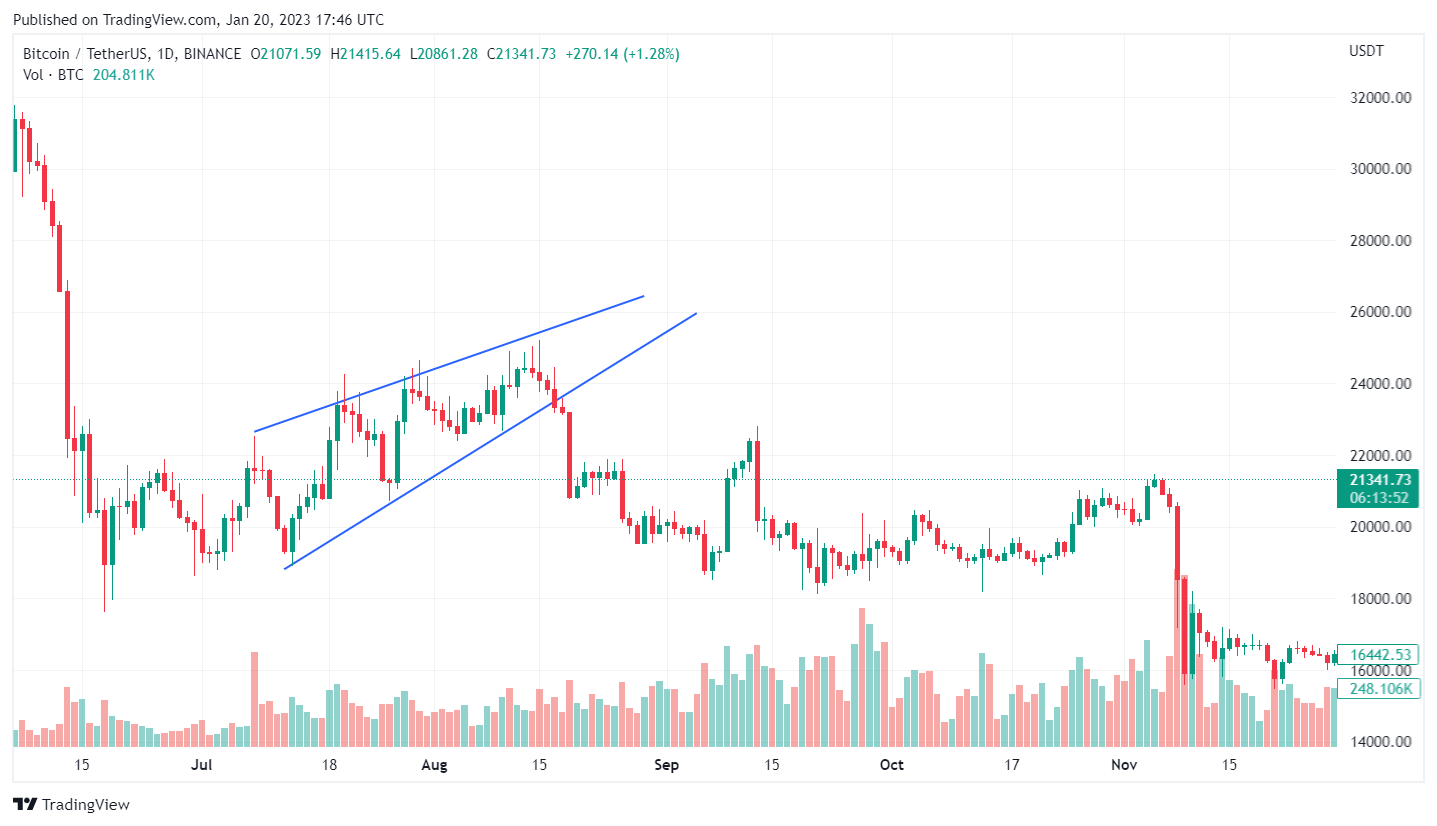
A rising wedge
In a falling wedge, the trendlines are sloped downwards, but the upper trendline has a greater slope than the lower trendline, as you can see in the chart below:
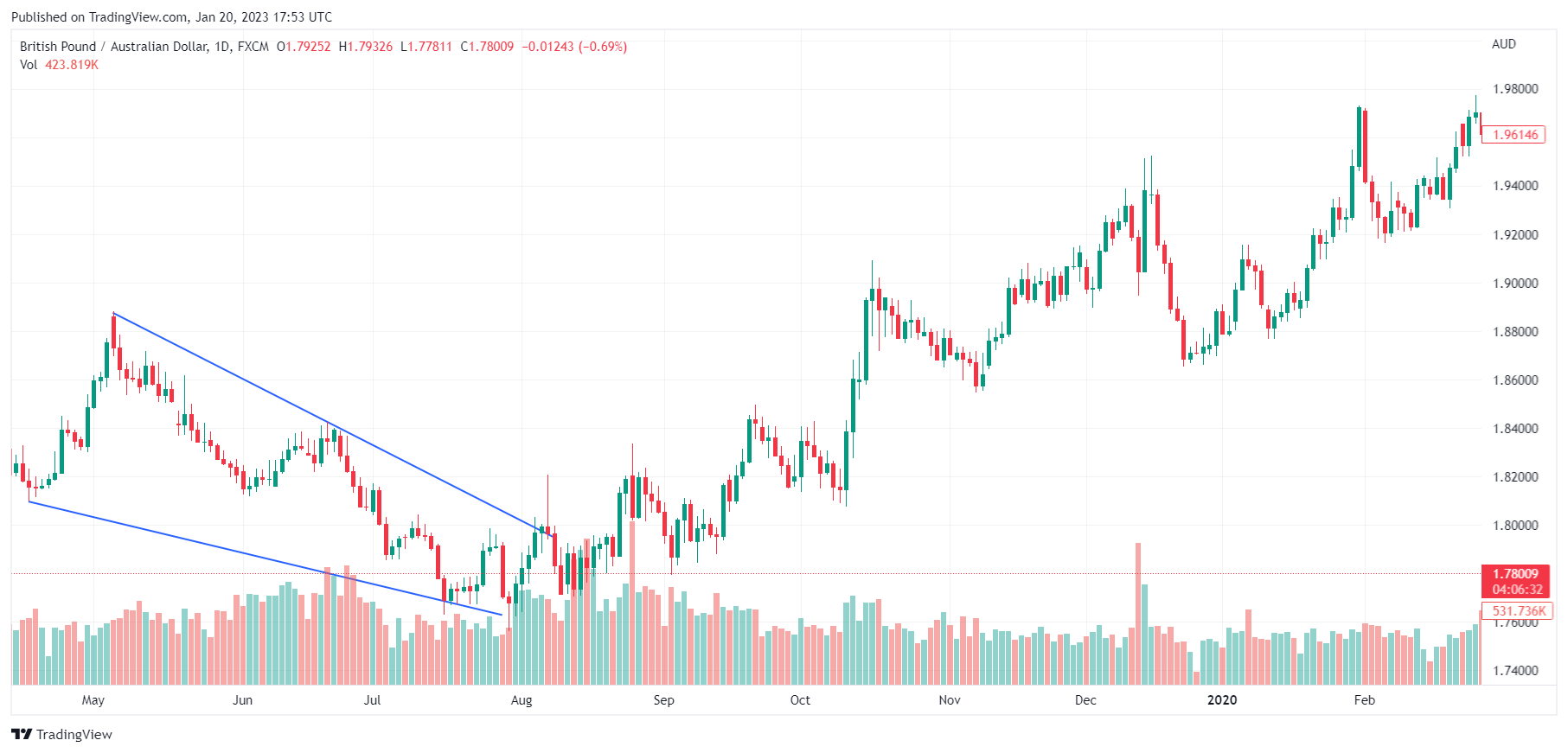
A falling wedge
Trading Wedge Strategies
You can use different strategies, depending on the market direction and the type of wedge:
- A rising wedge in an uptrend can be used to trade a bearish reversal strategy.
- A rising wedge in a downtrend can be used for a bearish trend continuation strategy.
- A falling wedge in a downtrend can be used to trade a bullish reversal strategy.
- A falling wedge in an uptrend can be used for a bullish trend continuation strategy.
Risk Management for Wedge Trading
Risk management can include different approaches:
- Using position sizing to limit capital at risk
- Using stop-loss orders to limit catastrophic losses
- Diversifying across different markets and timeframes
Tips for Successful Wedge Trading
- Know how to identify the wedge chart pattern
- Be mindful of the trend
- Take some profit at the projected target price and trail others if you want
- Don’t risk more than you can afford to lose
- Make use of stop loss and other risk management strategies