
Opening Price of a Stock: Incorporating It Into My Trading Strategy
The stock market is officially open for 6.5 hours daily and has an opening and closing price for each stock. What is the opening price of a stock?
The opening price of a stock (or any asset on an exchange) is the price of a security when it opens trading on the exchange at the beginning of the trading day. As a rule, the opening price is formed using the lowest ask of the security and the highest bid in the first 30 seconds of the exchange.
At the end of the article, we provide a backtest showing the gains in the stock market relative to the opening and closing prices.
Let’s start with learning more about the opening price of a stock (or an asset):
The opening price is not the same as yesterday’s closing price
It is important to note that one day’s opening price is not necessarily the same as the previous day’s closing price of the same security. They are usually different. Fluctuations in the value of an asset can continue even when the markets are closed, and the asset is not trading (which happens often).
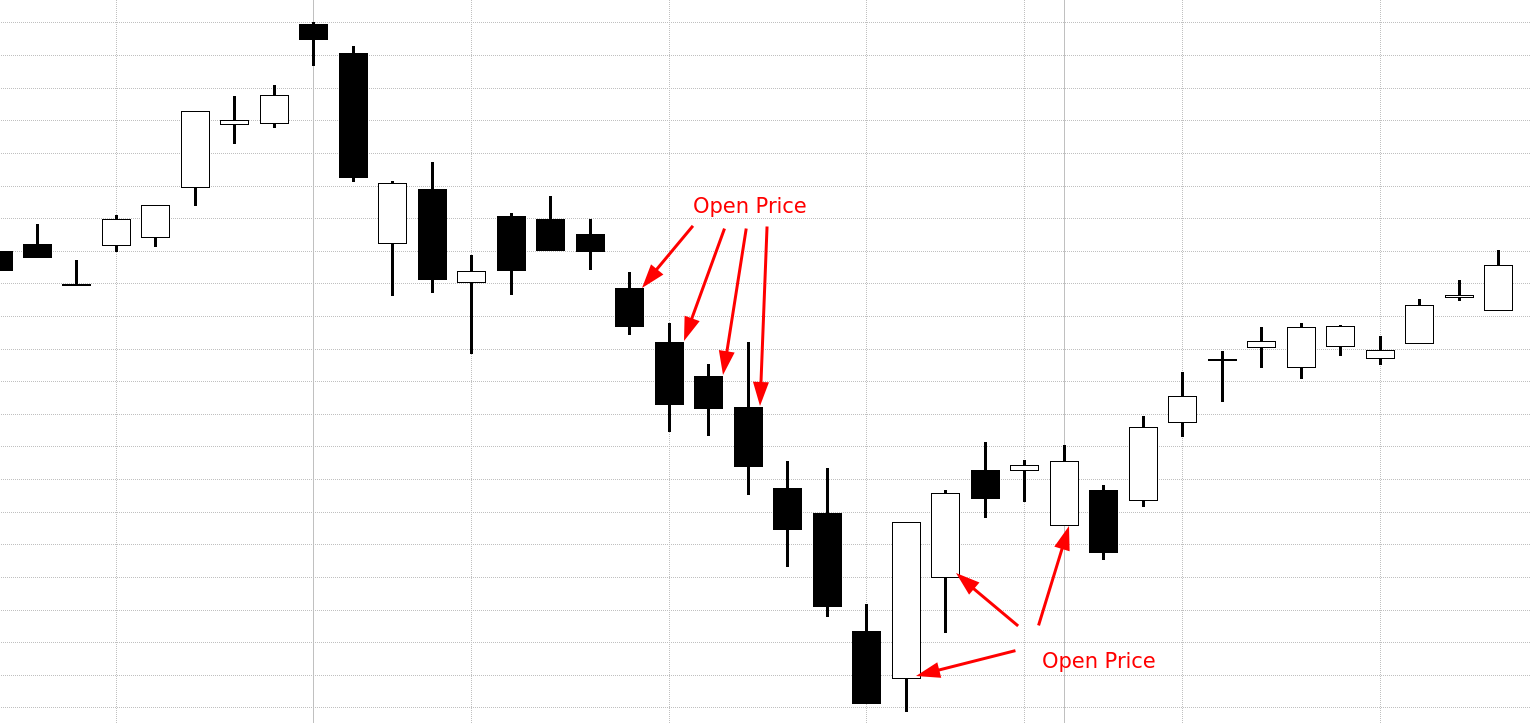
Let’s make a visual example by looking at the opening prices on SPY’s (the ETF that tracks S&P 500) daily candlestick chart:
- If the opening price is higher than the closing price, then a black candle is formed, which means that during the day’s trading session, there was a downward (bearish) trend;
- If the opening price is lower than the closing price, then a white candle is formed, which means that there was an upward (bullish) trend during the day’s trading session.
The opening and closing prices form the candle’s body:
Who determines the opening price
Many factors influence the opening price. Among them are company reports on earnings above or below expected, announcements of important news related to the company, investor expectations, scandals, and mor