

Small-Cap Effect Trading Strategy (Factor, Backtest, Performance, Setup)
Of the many classifications a stock can have, one of the most significant is relative to its size. It is well known in the market that small caps tend to perform better than large caps, something called the small-cap effect. However, how significant is the small-cap factor?
In this article, we are going to explore what the small-cap effect is, develop some trading strategies, and backtest them. We also remind you that we have backtested other factor investing strategies.
What is the small-cap effect (factor)?
The small-cap effect, also known as the small-cap premium, is a phenomenon that suggests that smaller companies tend to outperform larger companies over the long term. This effect is a key component of the Fama-French three-factor model, which attempts to explain stock returns based on various factors.
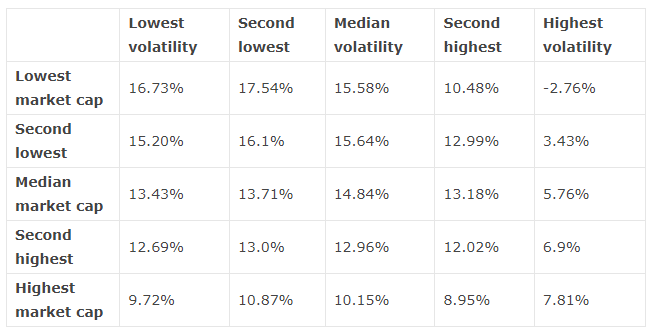
However, small-caps can be divided into volatile and non-volatile stocks (another factor). It turns out that volatile small-caps have not made money since JFK was president, while low-volatility small-cap stocks have been the best investment. We covered this in our article about the low volatility factor. The table below shows the different returns since 1963 for the different market caps and volatility:
The small-cap effect is typically associated with the following characteristics of small-cap stocks:
- Higher Historical Returns: Small-cap stocks have historically shown higher average returns compared to large-cap stocks. Investors often attribute this to the greater growth potential and risk associated with smaller, less-established companies.
- Greater Risk: While small-cap stocks have the potential for higher returns, they are also considered riskier investments. They can be more volatile and less liquid than large-cap stocks, making them subject to larger price swings. However, please keep in mind the table above.
- Market Inefficiencies: Some experts argue that the small-cap effect may result from market inefficiencies. Smaller companies may receive less attention from analysts and institutional investors, leading to mispricing and opportunities for savvy investors.
- Economic Sensitivity: Small-cap stocks are often more sensitive to changes in the domestic economy, as they may have limited international exposure compared to large-cap multinational corporations.
So in practice (and theory), small-caps perform really well. Now it’s time to backtest some trading strategies.
Small-cap effect trading strategy – backtest
For the backtest, we decided to use the portfolios calculated by French and Fama, and instead of backtesting just small caps in general, we paired them up with other factors.
The first one is formed based on size and book-to-market (value) at the end of each June using NYSE breakpoints. The book-to-market ratio for June of year t is the book equity to market equity for the last fiscal year ending in t-1.
Here is the equity curve of the three portfolios sorted by size and value:
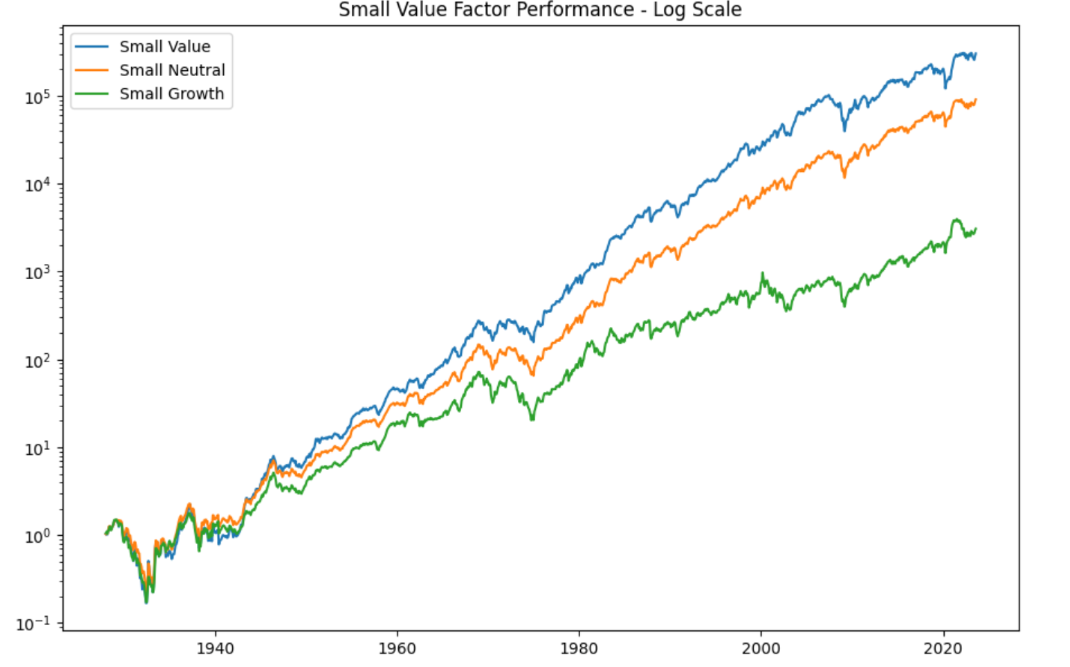
The returns look really good! Here are some performance metrics and statistics:
| Small-Value | Small-Neutral | Small-Growth | |
| CAGR | 14.10% | 12.68% | 8.75% |
| St Deviation | 28.19 | 24.25 | 25.98 |
| Max Drawdown | -88.60% | -85.79% | -88.56% |
| $100 Becomes | $30.268.299,10 | $9.117.061,49 | $306.653,57 |
The CAGR is really impressive, but not everyone is capable of supporting a ~90% drawdown and a standard deviation of nearly 30. Most traders and investors would fold.