
How To Calculate The Drawdown In Python For Your Trading Strategy
Investors often evaluate the performance of their portfolios by examining various metrics, and one crucial measure is drawdown. Drawdown represents the peak-to-trough decline in the value of a stock or portfolio during a specific period. It helps investors assess the risk and volatility associated with their investments.
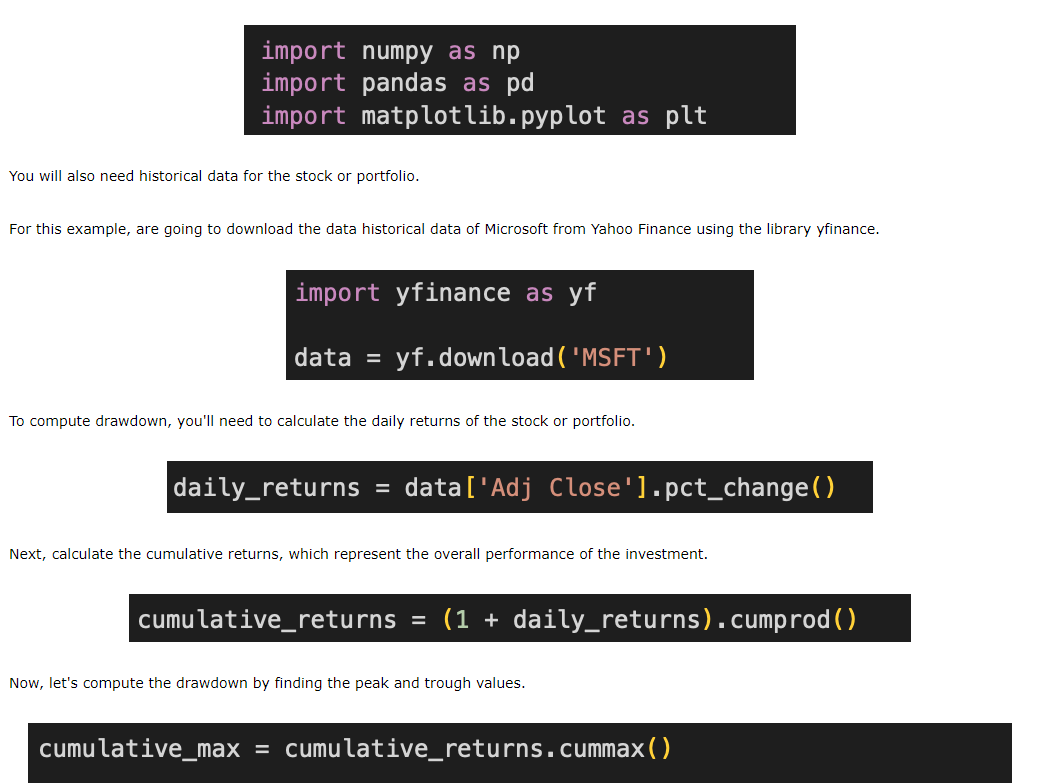
In this article, we will explore how to compute drawdown in Python, providing a step-by-step guide for investors and analysts.
Related articles:
- Python trading strategies – backtests, code, and rules (plenty of articles)
- Consistent and profitable trading strategies with rules and backtests (hundreds!)
What Is Drawdown?
Drawdown is a measure of the largest loss from a peak to a trough of a portfolio’s value. It is typically expressed as a percentage and provides valuable insights into the potential risk and downside of an investment. The formula for drawdown is:

Where:
- Peak Value is the highest value of the portfolio.
- Trough Value is the lowest value reached after the peak.
Why Is Drawdown So Important?
Drawdown is a crucial metric in the world of finance and investing because it provides valuable insights into the risk and potential losses associated with a particular investment or portfolio.
Very few traders can handle huge drawdowns. As a result, they do the opposite of what they should do: They buy into strength because of FOMO, and sell into weakness because of fear. They make cognitive mistakes (please click here for what is bias in trading).
Here are several reasons why drawdown is considered an important measure:
- Risk Assesment: Drawdown helps investors assess the downside risk of their investments. By understanding the maximum historical loss, investors can gauge the potential impact on their portfolio during adverse market conditions.
- Volatility Measurement: Volatility is a key factor in investment risk. Drawdown captures the volatility by measuring the magnitude of the declines in the value of an investment. Higher drawdowns generally indicate higher volatility and vice versa. We want to avoid drawdowns as much as possib