
End Of Bear Market Trading Strategy (Python Code)
In this article, we are going to show you a signal that has a 16% to 20% average return in the SPX a year after it is triggered and hasn’t failed since 1941. It’s called the end of bear market trading strategy.
Having a signal to know when to get back into the market after a huge decline can be very profitable. Distinguishing between a short-term rebound and a change in trend is crucial.
Let’s dive into the explanation, trading rules, backtest, and code of the end of bear market trading strategy:
End of bear market trading strategy – explanation
After a correction or bear market it can be difficult to determine if it’s over or, despite the short-term rebound, it will make new lows again.
This strategy employs the 4-month RSI to confirm this. The RSI is a strength indicator, and it’s usually low(<50) during market corrections.
If it reaches a high level(>60), it may signal that the downtrend is over, and it’s time to buy.
But does the idea work? Let’s backtest it.
End of bear market trading strategy – trading rules
Let’s have a look at the trading rules of the trading strategy:
[am4show have=’p2;p3;p58;p59;p130;p138;’ user_error=’Premium Post Access’ guest_error=’Premium Posts’]
The signal is triggered when the 4-month RSI is greater than 60 following an 18-month low in the previous 18 months.
[/am4show]
Thus, the trading rules are simple, but as you’ll see below, it has worked well, at least until now.
End of bear market – backtest
We backtested the strategy for the SPX since 1927. The data is not adjusted for dividends.
Here is the price of the SPX and signals in a chart:
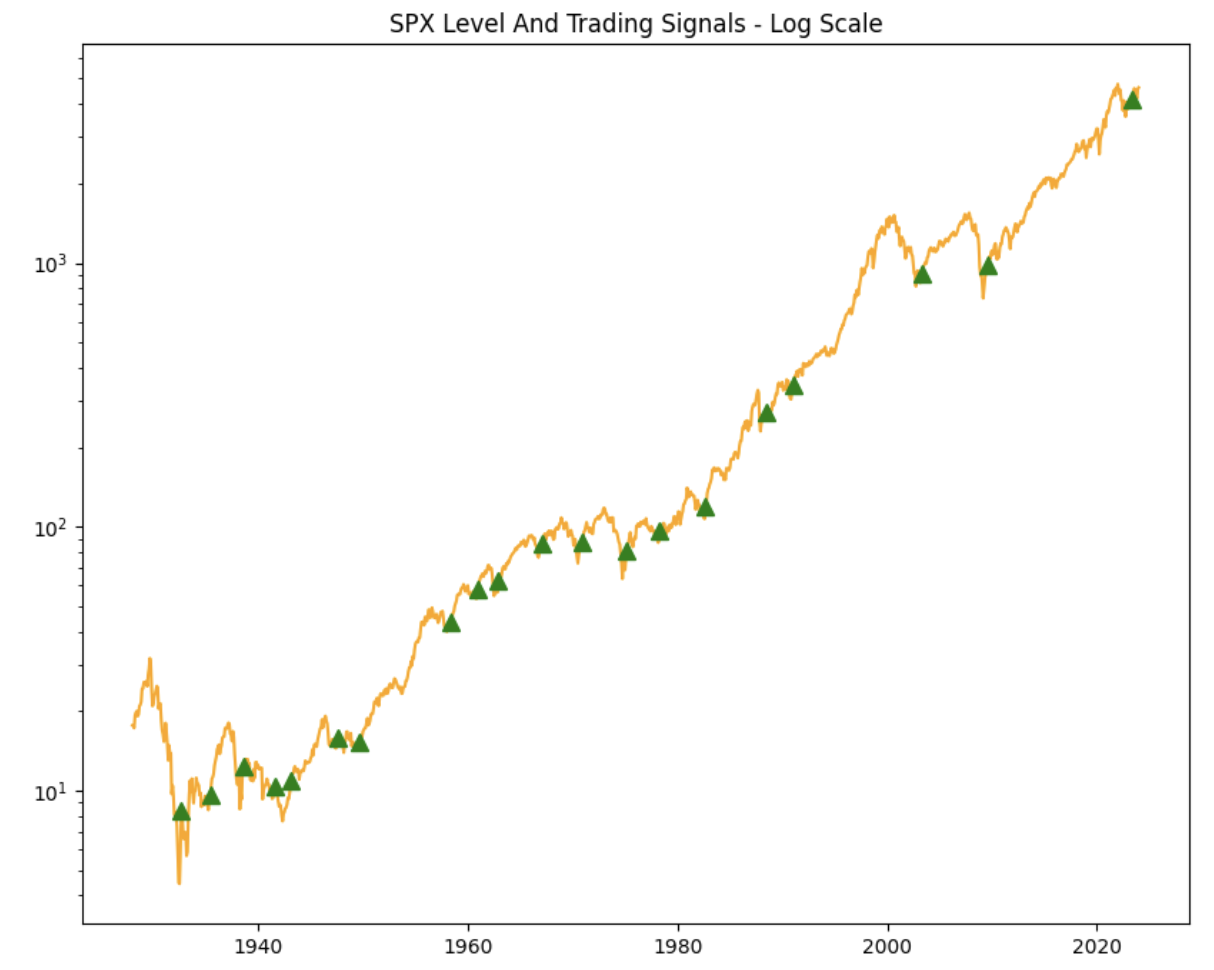
In total, the signal was triggered 25 times and the average performance was positive in all the periods tested. Here are the average returns:
- 1 month performance: 2%
- 3 month performance: 5.4%
- 6 month performance: 7%
- 9 month performance: 13%
- 12 month performance: 16.4%
And what about the Nasdaq? Here are the price levels and signals:
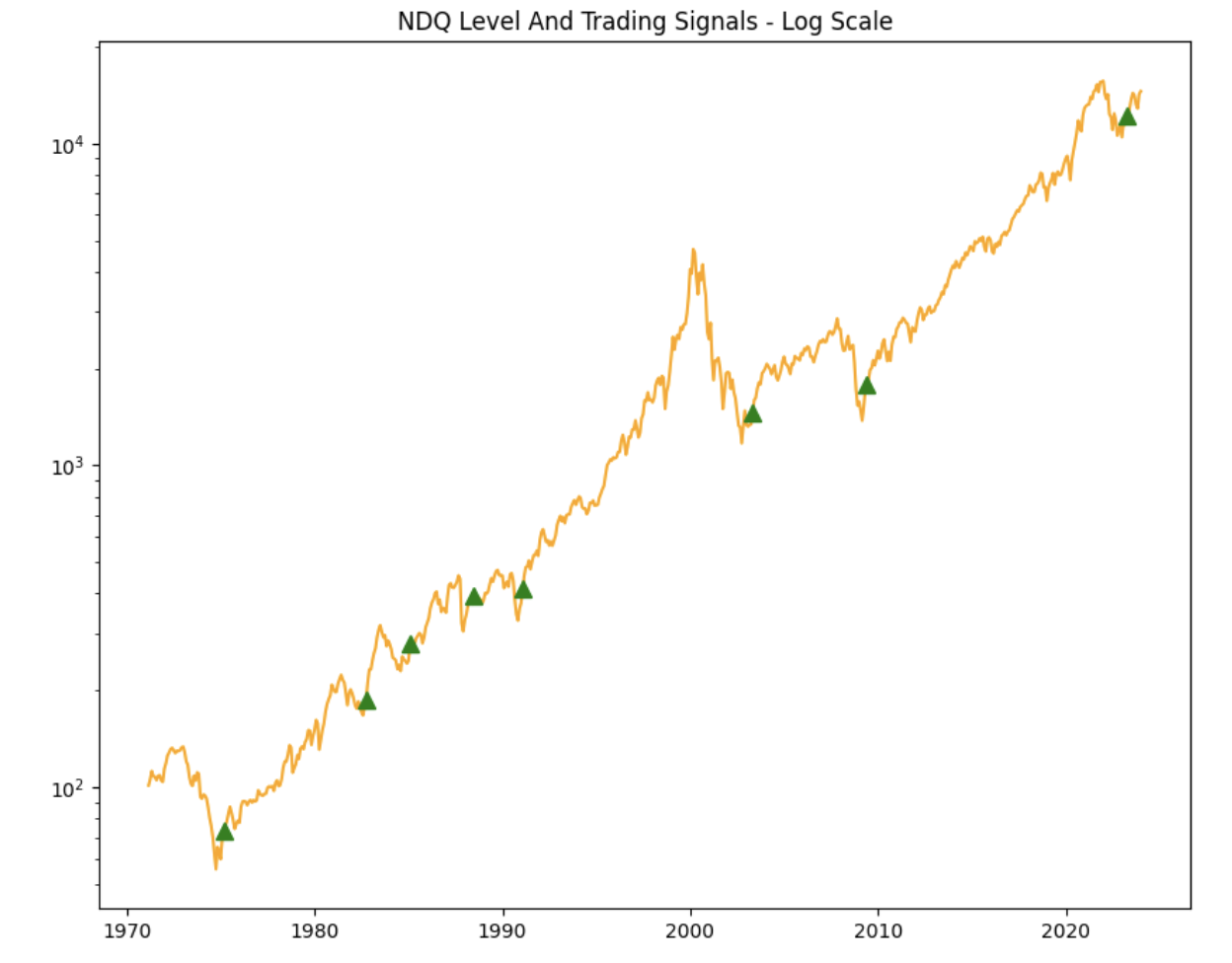
The signal was triggered 7 times and the average returns are even better than the SPX:
- 1 month performance: 5.5%
- 3 month performance: 12.2%
- 6 month performance: 18.7%
- 9 month performance: 26.3%
- 12 month performance: 31.5%