
Shanghai Stock Exchange
The Shanghai Stock Exchange, aka SSE, is one of China’s two major stock exchanges. The other one is the Shenzhen Stock Exchange. It plays a major role in the Chinese financial system and allows stock, bonds, funds, and other financial instruments.
The exchange has grown significantly in volume over the past years and is now the fifth-largest stock market in the world. In recent years, the exchange has taken steps to attract foreign investors. It has introduced programs like Shanghai-Hong Kong Stock Connect and Shanghai-London Stock Connect to expand its user base.
Do you know that the CSRC (Chinese Security Regulatory Commission) regulates the Shanghai Stock Exchange? The CSRC is responsible for overseeing all aspects of financial markets in China.
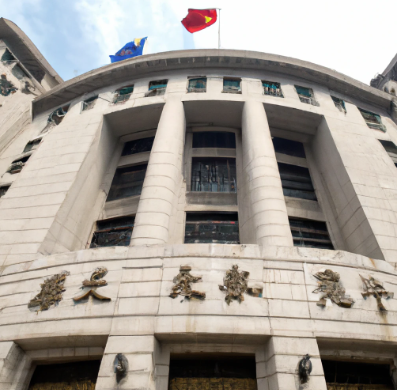
How did the Shanghai stock exchange start?
The Shanghai Stock Exchange started because of the Chinese government’s economic modernization efforts.
In the early 1980s, the Chinese government allowed the trading of securities. However, the prices of stocks were fixed by the government. It means that stocks didn’t give you any capital appreciation, just a dividend to hold them.
China started several pilot programs in the 1980s as it tapped into security trading. In 1986, the People’s Bank of China allowed over-the-counter markets in Shanghai and Shenyang. Two years later, the government allowed national debt bond trading. The prices of these bonds were determined by supply and demand.
However, these efforts were limiting the potential for investors, as the government controlled everything. Seeing the effects of controlled policies on the country’s economic modernization efforts, the People’s Bank of China and the Ministry of Finance created a research group called the Stock Exchange Executive Council.
The research group established the Shanghai Stock Exchange.
When was the Shanghai stock exchange founded?
The Shanghai Stock Exchange was founded in 1990. However, its origins can be traced back to the 19th century.
In the 19th century, Shanghai, situated on the Pacific coast, was an important financial center. At that time, the British and French controlled the economic activity. In the 1860s, shares of local companies were listed in the newspapers. Then, in 1891, British, French, and some American businessmen established the Shanghai Stock and Sharebrokers Association.
In 1904, the association registered a company in Hong Kong called the Shanghai Stock Exchange. Apart from the association, businessmen formed another stockbroker association in 1909 and named it Shanghai International Settlement. Years later, in 1928, the two associations merged and formed the Shanghai Stock Exchange.
The exchange was the largest stock market in Asia. In fact, it collaborated with the New York Stock Exchange (NYSE), and orders between the two exchanges were taken through the cable. The Shanghai Stock Exchange was disbanded when the Japanese took over China, and the operations were suspended in 1941.
After World War 2 II, in 1946, the Shanghai Stock Exchange reopened. In 1950, when the communist revolution took place in China, the Shanghai Stock Exchange was closed. As mentioned earlier, the exchange was reopened due to the modernization efforts of the Chinese government in the 1980s.
Who owns the Shanghai stock exchange?
The Chinese government owns the Shanghai Stock Exchange, a non-profit organization.
Although it is a non-profit, due to the country’s political structure, all financial operations and institutions are owned by the Chinese government. As mentioned above, the CSRC is a government regulatory body that regulates the Shanghai Stock Exchange.
Participants like banks, brokers, and other financial institutions don’t have direct ownership and are there to facilitate trading on the exchange. However, it does have a hierarchy, and Huang Hongyuan is the President and Chairman of the Shanghai Stock Exchange.
How does the Shanghai stock exchange work?
The Shanghai Stock Exchange works like a marketplace; investors can buy or sell securities like stocks and bonds.
The exchange allows the companies to list their stocks. The Shanghai Stock Exchange has certain guidelines for listing. These include;
- The company must gain approval from the CSRC.
- The company must not have been involved in any financial fraud for the past three years.
- It should have a minimum capital share of 50 million Chinese Yuan.
- The publicly traded stocks must exceed 25% of the total shares. If the company has over 400 million in capital, the publicly traded stocks can be reduced to 10%.
Fun fact: Three of the world’s largest companies are listed on the Shanghai stock exchange.
The exchange offers electronic trading that matches buy and sell orders in morning and afternoon sessions. We’ll talk about the trading hours in detail later on.
As an investor, you can submit orders like market, limit, pending, stop, etc. These orders are executed, and the Shanghai Stock Exchange facilities clear them through its clearing house.
The exchange also provides real-time market data, such as stock prices, market volume, and information on listed companies. This is helpful for investors as they are getting information from a primary source.
So, the SSE’s operations are similar to those of other stock exchanges, such as the NYSE, LSE, and Hong Kong stock exchanges.
What is the purpose of the Shanghai stock exchange?
The purpose of the Shanghai Stock Exchange is to act as a marketplace so investors can buy or sell securities. However, this isn’t the only purpose. As a stock exchange, the SSE serves many purposes, like:
One of the major purposes of the Shanghai Stock Exchange is to act as a source for raising capital for companies. When the companies list their stocks, the exchange allows investors to buy these shares to raise capital. Companies raise capital whenever the stock price increases and investors get capital appreciation and dividends.
Next, the exchange allows the buying and selling of financial instruments. It acts as a marketplace where investors can trade and manage their portfolios. These investors include institutional and retail investors.
As one of the largest exchanges in the world, the Shanghai Stock Exchange helps promote Chinese economic growth. As we mentioned above, the whole reason the Shanghai Stock Exchange restarted was to reform and modernize the economy. After more than three decades, the exchange contributes to China’s economic development.
Like Shanghai Connect programs, the exchange helps globalize Chinese financial markets. It plays a key role in attracting foreign investors and integrating with other stock markets.
Who created the Shanghai stock exchange?
The Shanghai Stock Exchange was created by the Chinese government as part of economic reforms that can take the country out of poverty.
As we explained above, the Shanghai Stock Exchange was created in the 1990s due to the economic reforms of the 1980s. The basic idea was to provide Chinese companies with a platform to raise capital and allow foreign investments.
The founding of the Shanghai Stock Exchange institutionalized stock trading and laid the groundwork for China’s future capital markets.
What are the trading hours on the Shanghai stock exchange?
The trading hours in the Shanghai stock exchange are from 9.30 AM to 3 PM Chinese Standard Time, Monday to Friday. The trading hours are divided into two sessions: morning and afternoon.
The morning session starts at 9.30 PM local time and continues till 11.30 AM. After that, the market closes at 1 PM. It’s called a midday break.
The evening session starts at 1 PM and continues till 3 PM Chinese Standard Time.
A key point to add here is that trading schedules can change depending on holidays (more on that in a while) and market conditions. The Shanghai Stock Exchange may not allow trading during periods of high volatility or in times of natural disasters.