
January Effect Stock Market 2024 (History And Backtest)
The January Effect Stock Market is a well-known seasonality and anomaly. The January Effect was first observed by investment banker Sidney Wachtel in 1925. It refers to the tendency for stock prices to rise in January. This anomaly has puzzled investors and analysts for decades and has sparked various explanations and theories to understand its occurrence. Does the January effect still exist?
Unfortunately, the January Effect Stock Market seems to have vanished. The January effect worked nicely for many decades and showed abnormal returns, but not anymore.
The January Effect in stocks is a theory suggesting that stock market prices tend to experience a greater increase in January compared to other months. It is important to distinguish this phenomenon from the January barometer, which suggests that the performance of stocks in January serves as a predictive indicator for the overall stock performance throughout the entire year.
Related reading: plenty of seasonal trading strategies
What is the January effect in the stock markets? What is meant by the January effect?
The January effect is easy to explain: That is (was) a seasonal effect that gave a push in the stock market during January. That means the monthly performance in January was higher than the average month rest of the year.
Why is it a January effect in the stock markets?
The most likely reason for the January effect in stocks is that investors shuffle more money into stocks.
Does the January effect in stocks still exist?
Unfortunately, the January effect stopped working about two decades ago. This is the equity curve in the S&P 500 compounded from 1960 until today:
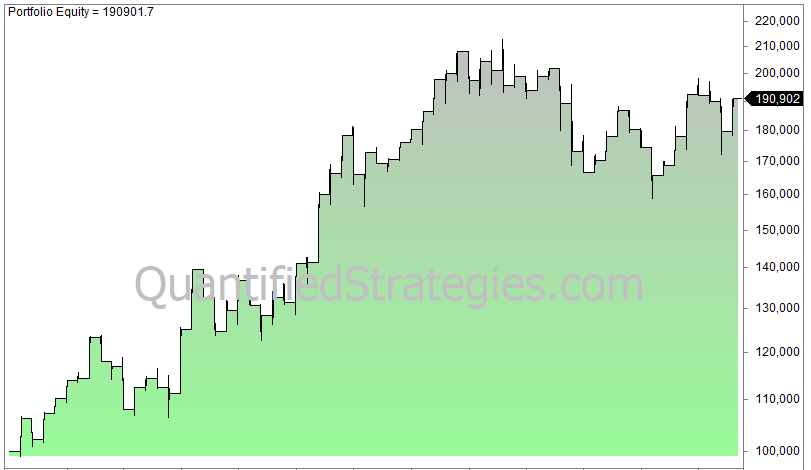
As we can see, the strategy stopped performing at about the turn of the millennia.
If you want to have the Amibroker or Tradestation code for the January Effect (and much of the code for our free trading strategies), please press this link:

Why doesn’t the January effect in stocks work anymore?
That is of course difficult or impossible to explain. However, as we have written numerous times, good strategies eventually grind to a halt. When something gets too obvious, it usually stops working. This is how markets work.
The January effect in the stock market that works:
The old and traditional January effect seems to have stopped working, but there is another January effect that seems to work.
FAQ:
– When was the January effect in stocks first published as a strategy?
The January effect was first published as a strategy in 1962, according to Victor Niederhoffer in the book “The Education of a Speculator.”
– What contributed to the January effect in the stock market in the past?
The most likely reason for the January effect was that investors tended to invest more money in stocks during January.
– Why did the traditional January effect stop working?
Historical Background and Observations
The January Effect was first observed by investment banker Sidney Wachtel in 1925. It refers to the tendency for stock prices to rise in the month of January. This anomaly has puzzled investors and analysts for decades and has sparked various expl