
The Anatomy Of A Bear Market: 2000 – 2003 Insights (S&P 500 and Nasdaq 100)
The anatomy of a bear market
Many traders believe, as a rule of thumb, that a bear market is a market that goes down 20% or more. But there is, of course, no official rule, but a bear market is regarded as both longer and steeper than a correction. However, as a trader, the most important thing is that volatility picks up. Perhaps ironically, long strategies tend to perform better in a falling than a rising market. Even better, short strategies suddenly start working when volatility picks up.
In this article, we look at some statistics of the bear market of 2000 to 2003 – the aftermath of the dot-com excesses. Bull and bear markets are a natural part of the stock market lifecycle and every trader should have a bear market trading strategy. By continuing reading, you will learn why you should welcome a bear market, whether you are an investor or a trader.
What are the characteristics of a bear market?
Bear markets are known for their high volatility and sharp rallies. Volatility picks up:
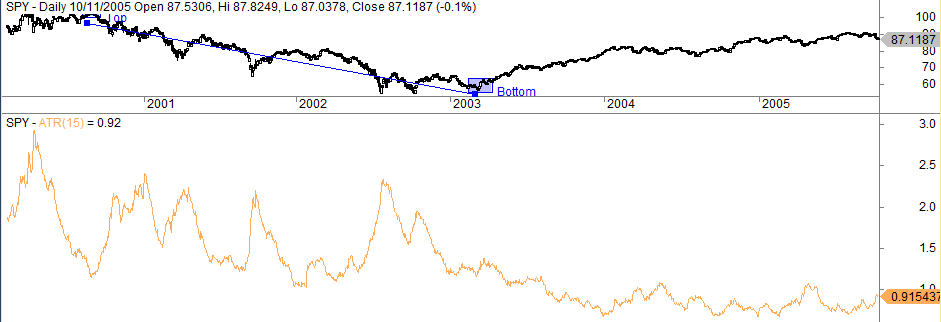
The chart above shows the 15-d