
Dark Cloud Cover Candlestick Pattern: Backtest Analysis
The candlestick chart is very popular among traders because it is easy to visualize and makes technical analysis a lot better. Candlesticks can form shapes and patterns that can give traders a clue about how the price might move in the future. One such pattern is the Dark Cloud Cover pattern
The Dark Cloud Cover is a bearish reversal candlestick pattern that occurs after an uptrend. It forms when a bearish candlestick follows a bullish candlestick, where the bearish candlestick opens above the previous bullish candlestick’s closing price but closes below its midpoint. This pattern indicates a potential reversal of the current bullish trend and a shift to a bearish trend.
In this post, we take a look at the Dark Cloud Cover candlestick pattern.
Dark Cloud Cover Candlestick Trading Strategy
The Dark Cloud Cover Candlestick pattern is a bearish reversal pattern that signals a potential trend reversal in a stock or any other security. It forms in an upswing when a red candlestick opens above the previous green candlestick’s closing price but closes below its midpoint, suggesting a shift from bullish to bearish sentiment.
The pattern consists of two candlesticks:
- The first candlestick is bullish (green or white or whatever color for a bullish candlestick), in line with the upward price swing preceding it
- The second candlestick is bearish (red or black, or whatever denotes bearish candlesticks); it opens above the preceding bullish candle and closes below its midpoint, signaling a potential change in momentum
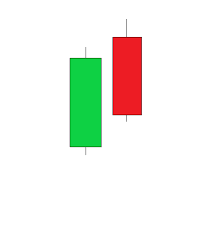
It might look like this on a chart:
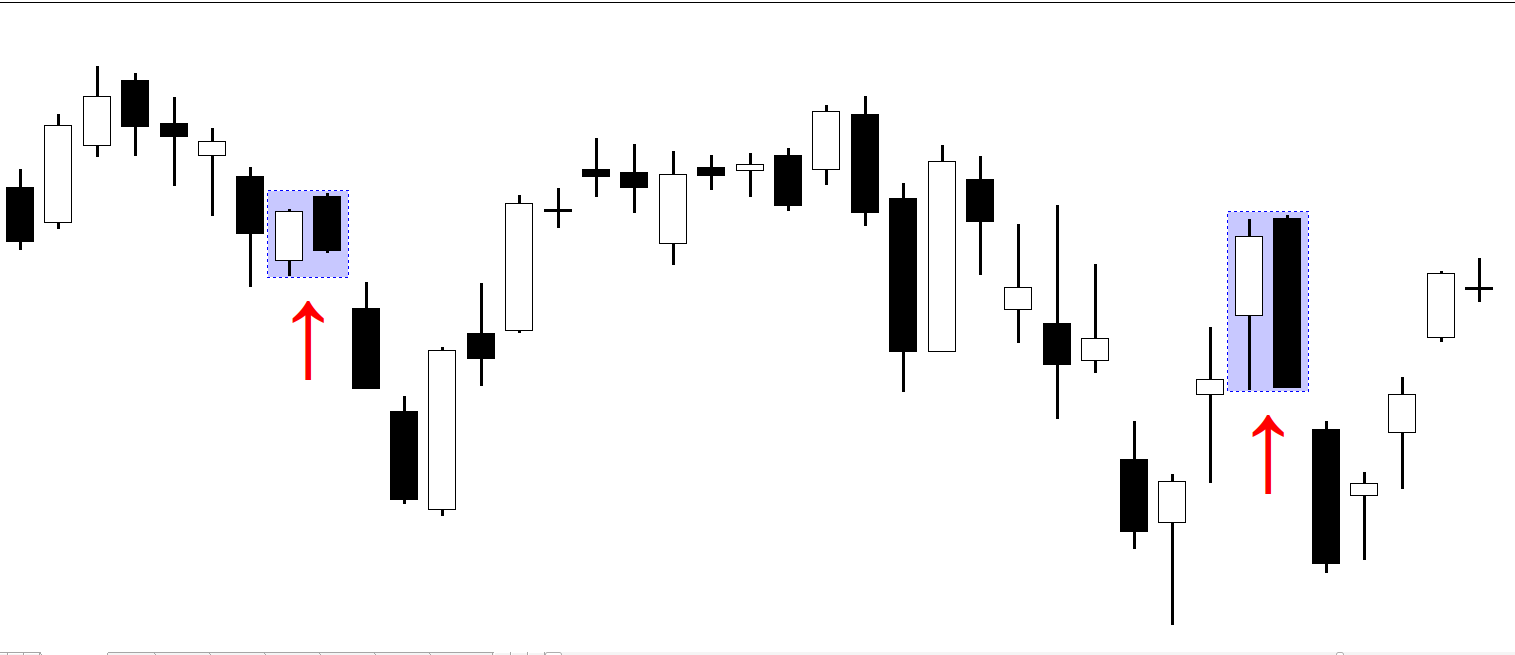
This pattern can be used as a signal for short selling or closing long positions. Traders typically look for the Dark Cloud Cover pattern in a rally in a down-trending market. Confirmation of the reversal can be obtained by monitoring price action over the next few days or by using technical indicators such as Moving Averages, MACD, or RSI.
It’s important to note that the Dark Cloud Cover pattern is not a guarantee of a trend reversal, but rather a warning sign of potential bearishness. Thus, traders should also consider other factors such as market news and fundamental analysis before making any trades. Also, risk management techniques should be used to limit potential losses in case the bearish reversal does not materialize.
Dark Cloud Cover Candlestick Pattern Backtest
We recommend backtesting all your trading ideas – including candlestick patterns.
To backtest candlestick patterns, you need to set specific rules and definitions. That requires time and effort, but don’t worry: it’s already done for you!

We have defined ALL 75 candlestick patterns and put them into testable, strictly trading rules. Each candlestick pattern is backtested and includes rules, settings, statistics, probabilities, and performance metrics.
Even better, you get the rules with Amibroker or Tradestation/Easy Language code (in addition to plain English if you like to code yourself, like putting it into a Python trading strategy, for example).
Click here to read more or order.
Benefits of the Dark Cloud Cover Candlestick Pattern
The Dark Cloud Cover candlestick pattern can provide several benefits for traders and investors:
- An early warning sign of trend reversal: The Dark Cloud Cover pattern is a clear visual indication of a potential trend reversal, providing an early warning signal for traders to take action.
- Easy to identify: The Dark Cloud Cover pattern is easy to identify, even for those new to technical analysis. This makes it accessible to a wide range of traders and investors.
- A possible indication of market sentiment: This pattern takes into account market sentiment, which can be an important factor in making trading decisions.
- Helpful in risk management: By using the Dark Cloud Cover pattern in conjunction with other analysis techniques, traders can better manage risk by adjusting stop-loss orders and taking profits at appropriate levels.
However, it’s important to note that the Dark Cloud Cover pattern should not be relied upon exclusively in making trading decisi