Dumb Money Trading Strategy (Backtest)
Introduction: Understanding Dumb Money in Trading
The term “dumb money” in Dumb Money trading strategy refers to a group of investors who are considered to be less sophisticated or experienced than other participants in the market.
These investors may make trading decisions based on emotions, FOMO, herd mentality, or a lack of understanding of how the markets work or what to expect. While the term “dumb money” is often used in a derogatory way, it is important to recognize that these investors play a significant role in market dynamics.
In short, they tend to buy and sell investments at the worst possible time, buying stocks when prices are on the rise and selling those stocks when prices start to decline. Hence, it’s often used as a contrarian indicator strategy.
In contrast, Smart Money refers to big institutional investors and mutual fund companies armed with teams of experienced investment analysts who can evaluate exactly what’s going on in the market, allowing them to make better investment decisions. Smart Money tends to buy and sell at the right time, while Dumb Money tends to buy and sell at the wrong time.
Of course, in reality it’s not as easy as that, but this is the thoery, at least.
Unveiling the Role of Dumb Money
Dumb money traders can influence market prices in several ways.
Their impulsive trading behavior can lead to sudden spikes and dips in stock prices, particularly in volatile or illiquid markets.
Additionally, herd mentality among dumb money traders can amplify the effects of news or rumors, further exacerbating market volatility.
On the other hand, dumb money traders can also provide liquidity to the market, allowing for easier execution of trades. Their trading volume can also contribute to the overall price discovery process, as their buying and selling activity helps to establish fair market prices.
Navigating the Risks and Opportunities
The presence of dumb money in the market creates both risks and opportunities for experienced traders.
By understanding the psychology and trading patterns of dumb money traders, experienced traders can develop strategies to exploit their inefficiencies and profit from their mistakes.
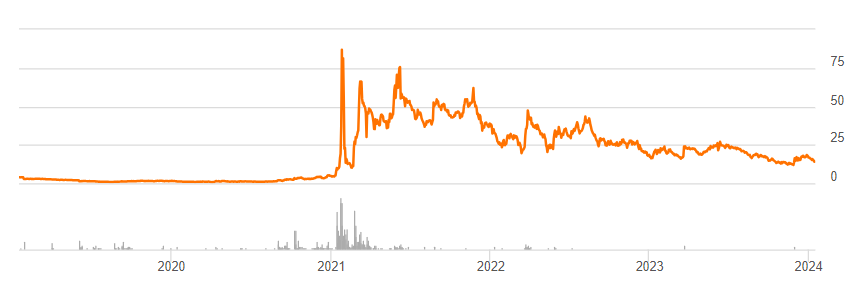
However, trading against dumb money can be risky, as their impulsive behavior can lead to sharp reversals in market direction. An example is the crazy rise in Gamestop in 2021 that sent many professional short sellers to the cleaners: