
Exhaustion Gap Trading Strategy
What is an exhaustion gap?
Exhaustion gaps are like a sign that the market is getting tired of going in one direction. After a long period of rising prices, for example, the market may suddenly gap up more than usual, signaling that it’s ready to take a break. This is a sign that the uptrend is losing steam and may soon reverse.
In other words, exhaustion gaps are like a warning that the market is reaching its limit and is about to change direction.
Exhaustion Gap Trading Strategy
If the stock market (SPY) gapped up over 1% after finishing strong over the previous days. Here is a potential strategy for the short side:
- Yesterday’s close must be at 10 day high (of the close, not the high).
- Today SPY gaps up at least 1.5 times the absolute value of the 25 day average (of the gaps).
- Go short at the close.
- Exit on tomorrow’s open (it works better on the open than the close).
In point 2 I have used 1.5 times simply to get enough fills. The higher the gap, the better the results (from 2005 until present):
| P/L in % | #fills | Avg. |
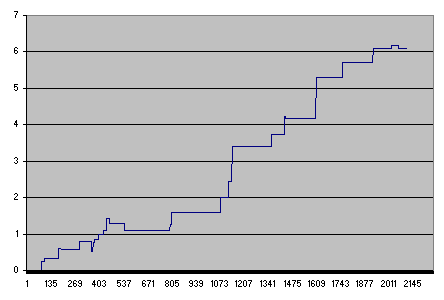
| 6.09 | 27 | 0.23 |
Here is the equity curve:
 If we flip the strategy and do it on the long side we get this result:
| P/L in % | #fills | Avg. |
| 15.66 | 30 | 0.52 |
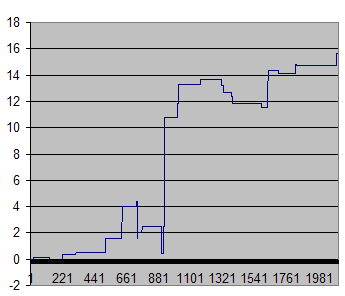
As we can see, not as stable on the long side!
FAQ:
– What is the strategy for shorting SPY after a significant gap up?
The strategy involves shorting SPY when yesterday’s close is at a 10-day high, and SPY gaps up by at least 1.5 times the absolute value of the 25-day average gaps.
– What criteria trigger the short trade in this strategy?
The short trade is triggered when both yesterday’s close meets the 10-day high condition, and today’s gap is at least 1.5 times the absolute value of the 25-day average gaps.
– When should traders exit their short positions in this strategy?
In this strategy, traders should exit their short positions on tomorrow’s open, as it has shown better results compared to exiting at the close.