
Gap Trading Strategy (How To Trade a Gap Fill With Backtested Examples and Tips)
Gap trading strategies have been a popular tool for many decades. Gaps vary in size, variations, and volume depending on the asset you are looking at. Gaps can be traded in any instrument, and certain asset classes have substantial daily gaps.
This article looks at gap trading strategies in the stock market. We provide you with some backtested examples of how to trade gap fills, but unfortunately, the low-hanging fruit has been “arbed” away. Gap trading is not nearly as profitable as it used to be, both in individual stocks and stock indices.
What is a gap in trading?
Before we continue, let’s briefly explain what a gap is:
A gap is price levels that are not traded (or at least have very little trading) between the close and the open the next day.
For example, if the close yesterday was 100 and today the stock opens at 95, there is a gap between those two points.
This chart shows the gaps in the ETF with the ticker code EWA during March 2020 when the Covid-19 mess struck:
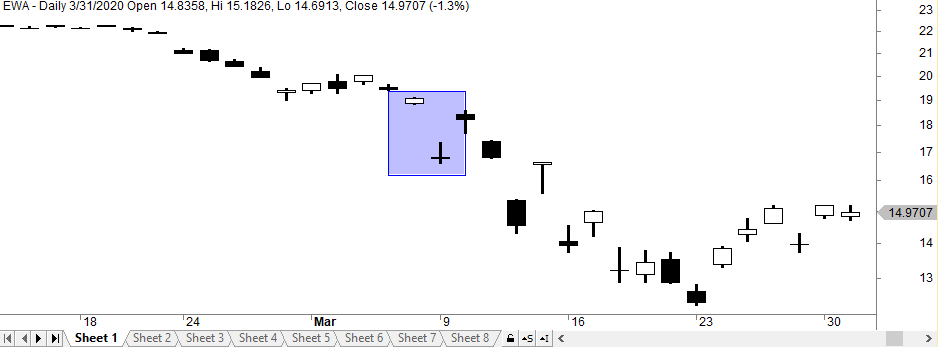
As you can see, EWA closes around 19 and opens the next day at below 17 – a pretty big gap down. In the trading language, this is called a “gap down”.
Gaps can occur in any time frame there is. The above is a daily chart, but gaps happen in all time frames – even intraday charts when news is published. However, they are most frequent on daily charts.