
How I Trade For A Living – Gary Smith
How I Trade For A Living by Gary Smith was (and still is) a popular trading book. We bought the book just days after it was published in 1999, in the midst of the dot com frenzy, and we have reread it at least a couple of times. We regard How I Trade For A Living as one of the best trading books.
There are plenty trading books out there, but this is absolutely one of the better ones. The book is truly authentic and Mr. Smith documents his trading results.
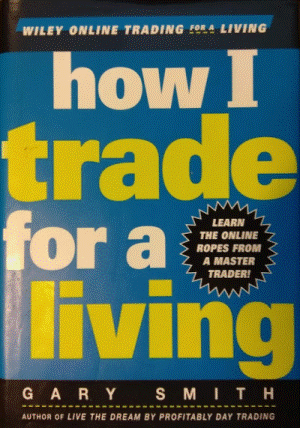
Who is Gary Smith?
Mr. Smith is a full-time home-based retail trader. He’s one of the few writers that actually documents his track record, and it’s quite impressive although he is far from any “trading star”. For that, his gains are too moderate, but assuming his track record is correct, he has a very impressive trading style in terms of consistency and small drawdowns.
When the book was published, Gary Smith had managed to increase his trading account from 2 000 to 700 000. That amount might not be so impressive, but keep in mind that this is 30 years ago and Smith has had very few losing months. His results are very consistent.
This is what Mr. Smith’s writes about himself on Amazon:
Instead, it has come from trading junk corporate, junk municipal, emerging markets, and securitized bond mutual funds. The last 12 years since 2009 have been the most profitable. During that span through June 2021, I have made over $2,700,000 with less than a 1% drawdown along the way. That averages out to some $225,000 annually and a long ways away from my initial stake of $2200 in the Spring of 1985. It just demonstrates the power of the compound effect of consistently and persistently compounding one’s capital over time. My attraction to the bond funds are their trend persistency over long periods of time combined with their low volatility. I have always preached that traders need to find their own trading niche. I found mine in the bond funds and using the same momentum indicators I used while trading the stock index futures and equity funds.
What is How I Trade For A Living about?
This is a very personal book. Smith describes his journey where he spent 19 years dreaming of making it rich as a trader, but ultimately failed every time he tried. He goes through his 19 losing years until he in 1985 finally sat down and analyzed where he had gone wrong all these years.
After describing how he ended up down for the count, he describes how he managed to put it all together to become profitable:
- Trading is a profession
- How he uses trading filters
- Which tools and indicators he uses
- What kind of seasonalities he employs
- Which risk management techniques
The book ends with three chapters about his three main trading vehicles: mutual funds, junk bonds, and stock index futures.
Takeaways from Gary Smith’s How I Trade For A Living
Don’t let its age scare you. Despite being in its third decade, you can learn a few tips and tricks. For example, how many traders are trading mutual funds and junk bonds? Needless to say – very few do. Gary Smith has found his niche in these instruments and it seems to suit him perfectly.
The four main takeaways are these:
Know yourself as a trader
This is what Smith writes:
(We have written an article based on the personality test for traders made by Brett Steenbarger.)
For the first time in 19 years as a trader, I decided to find out where I had gone wrong. Isn’t that amazing? Throughout my trading career, I just assumed that someday I would strike it rick, that dreams always come true simply dreaming. Never once did it occur to me that achieving my dream of trading for a living would require hard work, planning, and discipline. It also requires persistence. But that was one trait I didn’t seem to be lacking. Aftr all, even though I never succeeded in the game, here I was 19 years later, still plugging away.
Smith decided to cut down his spending in order to have as little detachment to money as possible. He moved from high costs in California to rural and cheap Kentucky (!). As a trader, you want to have as little attachment to money as possible.