
How To Trade And Invest In Oil Stocks (Guide with Trading Strategy and Seasonality Insights)
There are plenty of seasonalities in the markets that you can develop into seasonal trading strategies. Today we look at a seasonal trading strategy in crude oil.
It turns out that all the gains in oil and energy stocks since 1986 have come from December until the end of May, while the other months have produced negative returns. Thus, being invested only half the time might be a good idea?
Seasonalities in the markets
We have already covered some well-known and tradeable seasonalities in previous articles:
- The turn of the month trading strategy
- Monday/Tuesday trade in Nasdaq
- Monthly momentum in SPY and TLT
- September is the worst month of the year
- Sell in May and go away
But what about oil and energy stocks?
Seasonal trading strategy in crude oil
It turns out that energy stocks have strong seasonalities. Just look at the 35 years of data of the ticker FSESX, Fidelity’s energy fund:
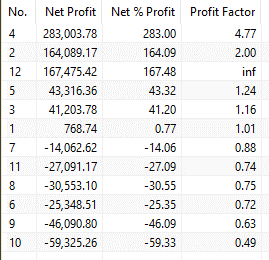
The first column indicates the month. April, February, and December are the three best months. The return is measured from the close of one month to the close of the next month.
Actually, all the gains have come from being invested only from December until the end of May. The other months have produced huge negative returns.
It has paid off handsomely to be invested from the close of November until the close of May:
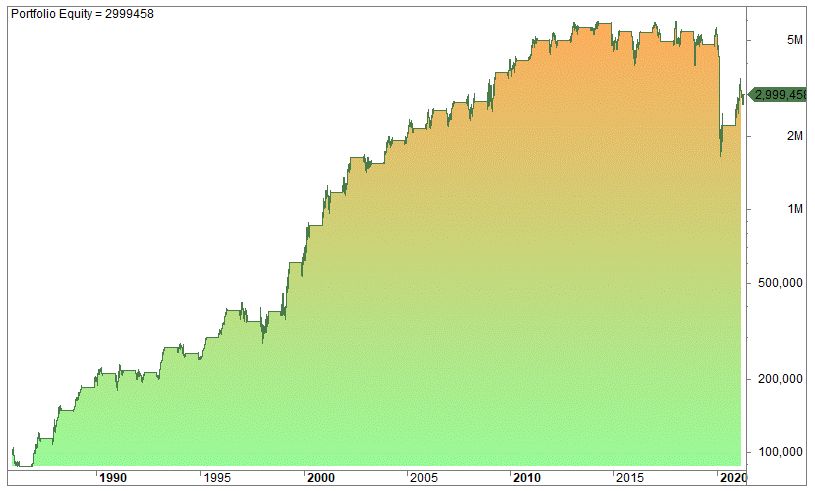
The CAGR is 10.2% compared to buy and hold of only 2.75%.
If we were only invested during the bad months, ie. from June until the end of November, the equity chart looks like this:
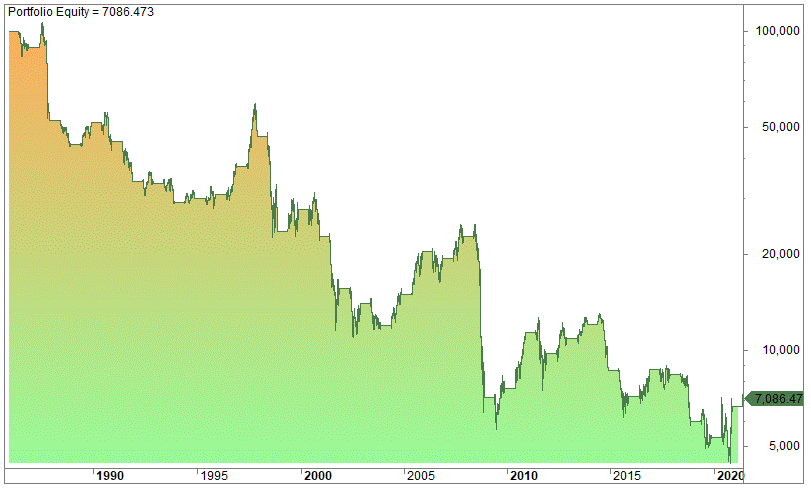 The CAGR is a whopping negative 7.2%.
The ten largest current components of the FSESX are these:
| Schlumberger Ltd | SLB | 19.74% |
| Baker Hughes Co Class A | BKR | 12.57% |
| Halliburton Co | HAL | 7.22% |
| TechnipFMC PLC | FTI | 6.27% |
| ChampionX Corp | CHX | 5.78% |
| Cactus Inc Class A | WHD | 4.58% |
| National Energy Services Reunited Corp | NESR | 4.33% |
| Oceaneering International Inc | OII | 4.02% |
| ProPetro Holding Corp | PUMP | 3.76% |
| NexTier Oilfield Solutions Inc | NEX | 2.91% |
Seasonality in oil – conclusion:
The seasonal crude oil trading strategy has been consistent for at least 35 years, but perhaps not as consistent as it was before.
Is this a tradeable seasonality? Only you can find out, but this is not a wager we put a huge amount of money on.
FAQ:
– What is a seasonal trading strategy, and how does it apply to crude oil?
A seasonal trading strategy involves exploiting recurring patterns in the market during specific times of the year. In the case of crude oil, the strategy focuses on historical trends in oil and energy stocks, revealing that significant gains have consistently occurred from December to the end of May.
– What is the performance difference between the seasonal trading strategy and buy and hold for crude oil?
The seasonal trading strategy for crude oil has a Compound Annual Growth Rate (CAGR) of 10.2%, significantly outperforming the buy and hold strategy with only a 2.75% CAGR. This indicates that being invested during specific months, as opposed to holding throughout the year, has paid off handsomely.
– Why might the seasonal crude oil trading strategy not be a wager for a significant investment?
While the seasonal crude oil trading strategy has been consistent, its tradeability may vary. The decision to invest significantly should be based on personal risk assessments and preferences. Seasonalities, while observed historically, may not guarantee future results, and caution is advised.