
Inside Day Trading Strategy – An Inside Day (Rules And Backtest Results)
Frequently you can hear about an inside day, especially in the stock market. What is an inside day in trading? Is an inside day profitable? Can you use inside days as trading signals and develop inside-day trading strategies? In this article, we explain what an inside day is and backtest several markets whether an inside day is profitable or not.
An inside day is defined by two bars where the last bar has all price action below yesterday’s high and above yesterday’s low. In other words, today’s price action and trading are completely inside yesterday’s. Our backtests indicate that an inside day is a poor trading signal and inside day trading strategies don’t work.
Let’s start by explaining what an inside day is:
What is an inside day trading strategy?
You need two bars to define an inside day. The reason for this is obvious when you learn that an inside day is when the low is higher than yesterday’s low and today’s high is lower than yesterday’s high. If both conditions are fulfilled, you have an inside day.
In other words, all price action of an inside day is inside the price action of yesterday. The whole range falls inside the range of yesterday. This chart of the oil futures reveals plenty of inside days (green arrows – ignore the red arrows):
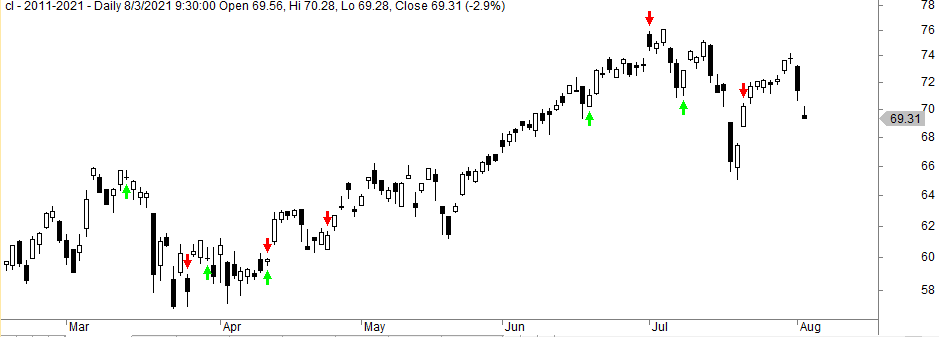
As you can see, the bars over the green arrows show an inside day and they are quite frequent, but it varies from market to market. It depends on the volatility and the price action between the close and the opening the next day. The above chart is crude oil and this market has many inside days.
Those asset classes susceptible to macro news show frequent inside days, like, for example, oil and gold. However, it depends on if you are looking at regular trading hours or the 23-hour electronic market. The chart above in oil shows the 0930-1600 market New York time. This time frame has of course more inside days than the 23-hour market.
An inside day can happen on intraday bars, daily bars, weekly bars, and whatev