
Trade Around A Core Position Trading Strategy (How, Rules, Backtest, Returns)
To many, trading stocks is all about making a single buy of a stock, waiting for it to reach your profit target, and exiting your trade. While that is an effective way to trade, you may be able to make more profits by trading around a core position if both your technical and fundamental analysis supports a big move in the market over the longer term. But what does trade around a core position mean?
Trading around a core position is a trading strategy whereby a trader has a relatively longer-term position in a security but then makes some short-term trades as the market moves without tampering with the initial long-term position. This method allows the trader to make some profits from the short-term adverse price moves while still keeping the main position. It is mostly used in stock trading but can be applied in other markets, such as futures, ETFs, and cryptocurrency.

In this post, we take a look at a core position and the trade around a core position strategy. We end the article with a backtest.
Related reading:- We have plenty of trading systems for sale
What does trade around a core position strategy mean?
Trading around a core position is a trading strategy whereby a trader has a relatively longer-term position in a security but then makes some short-term trades as the market moves without tampering with the initial long-term position.
This method allows the trader to make some profits from the short-term adverse price moves while still keeping the main position. It is mostly used in stock trading but can be applied in other markets, such as futures and cryptocurrency.
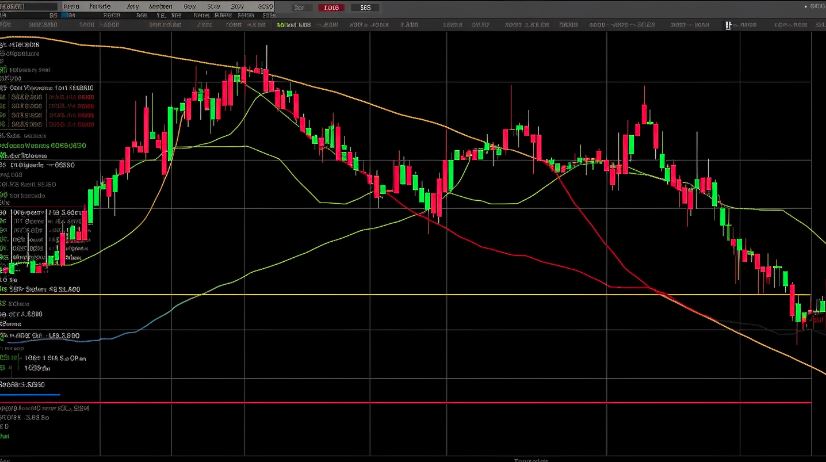
The strategy takes advantage of the fact that the market does not move in a straight line but rather swings up and down despite its long-term direction.
On the basis of that, a skillful trader can have a long-term position and still try to profit from short-term price swings. It could be viewed as a sort of diversification across time frames because if the core position is a swing trade on the daily timeframe, the “trade around” could be on intraday timeframes — scalping and day trading.
For example, you can trade the same stock in various timef