Junk Bond Trading Strategies: Seasonality and Backtest Insights
Junk bonds are probably an asset class that very few traders are involved in. Junk bonds tend to correlate with the stock market, but junk bonds seem to trend more than stocks, which opens possibilities to make uncorrelated junk bond trading strategies.
This article explains what a junk bond is, why it correlates to the stock market, and how you can backtest this asset class. We backtest and look at a few junk bond trading strategies.
What are junk bonds?
Junk bonds are my one true love in the financial arena, and even that’s an understatement of my appreciation for this asset class….For me and junk bonds it was definitely love at first sight.
– Gary Smith, How I Trade For A Living, page 183
A bond is a fixed income security issued by a company (mostly companies, but it could also be a government entity). When the bond is issued it pays a coupon of x percent at N intervals per year. The bond is in reality a loan from the investors to the company.
The price of the bond might fluctuate depending on the overall interest level, the mood swings of Mr. Market, or improved or deteriorated prospects for the issuing company. When the price of the bond drops, the coupon yields more to reflect the increased risk. Thus, the value of the bond and the yield always move opposite.
It is called “junk” because they have a higher risk of default. A default happens when the issuing company is no longer able to pay the coupon.
If the risk of default is high, the higher the original coupon, but the yield fluctuates wildly over the life of the bond before it matures or is called back. Ratings are done by rating agencies, for example, Moody’s and Fitch.
Ratings below BBB and Baa are expected to have more defaults and are thus labeled “junk bonds”. Ratings higher than this mean the company has “investment grade”.
The term “junk” scares many potential investors and traders away from this asset class. But many well-known companies have junk bond status: Ford, Tesla, and Netflix are all below investment grade.
Keep in mind that junk bond yields have fallen dramatically over the last 40 years, just like Treasury yields. For example, in 1991 junk bonds yielded 17%, in 1998 11%, while they today have a minuscule 4% yield.
Does this reflect the true risk? Who knows, only time will tell. If you are a short-term trader it shouldn’t matter so much, except that the long-term trend might go down if rates go up.
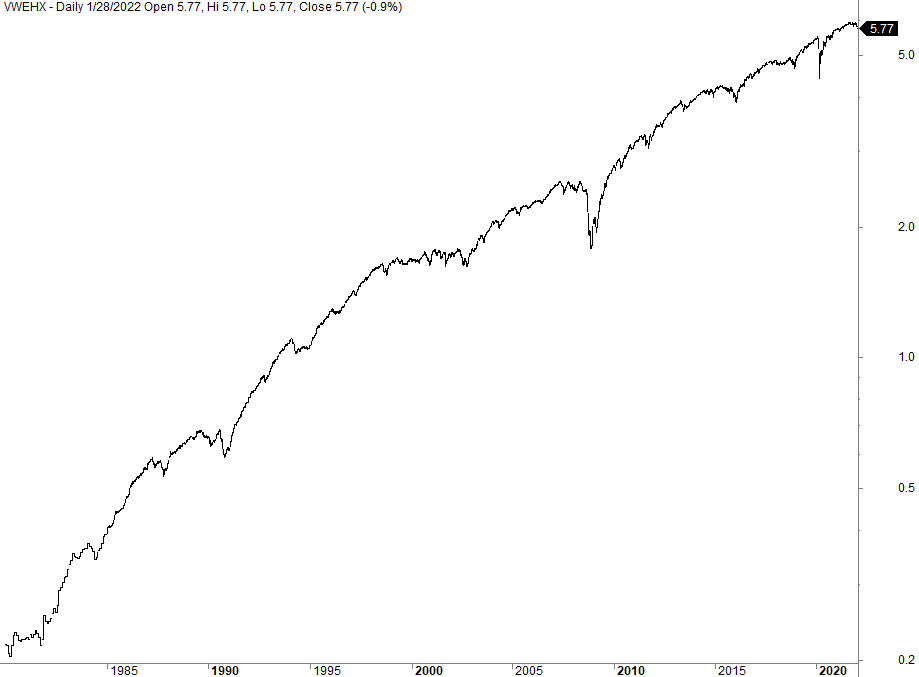
The tailwind from falling interest rates has been significant. That, and the combination of “income” from the coupon, has made junk bonds compound at around 8% since 1980. This is the performance of Fidelity’s junk bond mutual fund: