
3 Volatility Strategies To Get You Started Trading Volatility – (Strategy Bundles)
This bundle consists of three strategies that can be labeled volatility trading strategies. The idea and logic work in a variety of assets.
In all our bundles you will find both Amibroker code, Tradestation code, Pine Script/TradingView, and the strategy written in plain English. The strategies are long-only due to the nature of the index.
- 2 strategies are not published anywhere on our website
- One strategy is in our monthly membership.
These strategies are long-only due to the nature of the index backtested.
Please read this before you buy:
- We don’t give rebates if you already believe you have one of the strategies. We believe the strategies are pretty cheap anyway.
Please check out our other Strategy Bundles.
Here are the details about each strategy (backtested on SPY/ES):
Volatility strategy 1
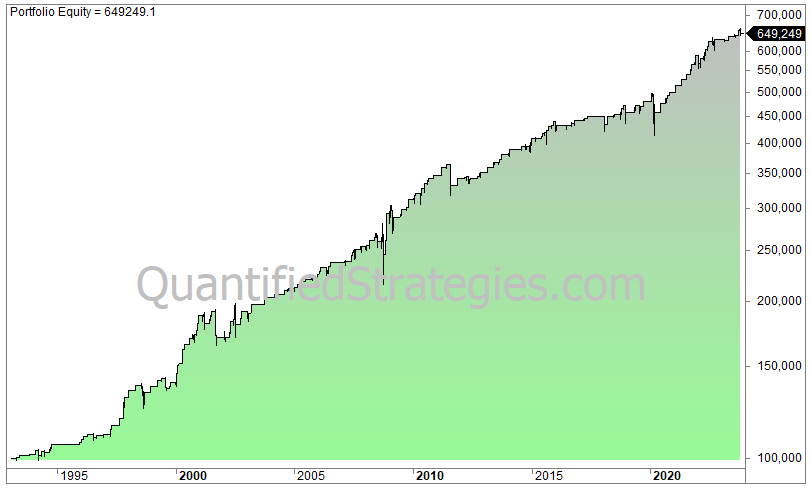
Strategy and performance metrics:
- #trades: 208
- Average gain per trade: 0.94%
- CAGR: 6.2%
- Time spent in the market: 10%
- Max drawdown: 23%
- Risk-adjusted CAGR: 63%
- Win rate: 80%
- Max consecutive losers: 3
- Max consecutive winners: 15
- Profit factor: 2.6
Volatility strategy 2
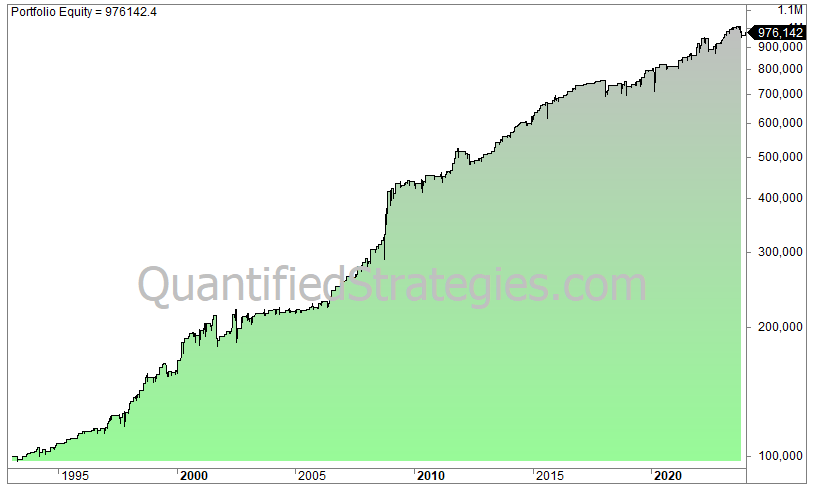
Strategy and performance metrics:
- #trades: 307
- Average gain per trade: 0.77%
- CAGR: 7.6%
- Time spent in the market: 14%
- Max drawdown: 16%
- Risk-adjusted CAGR: 54%
- Win rate: 76%
- Max consecutive losers: 4
- Max consecutive winners: 12
- Profit factor: 2.5
Volatility strategy 3
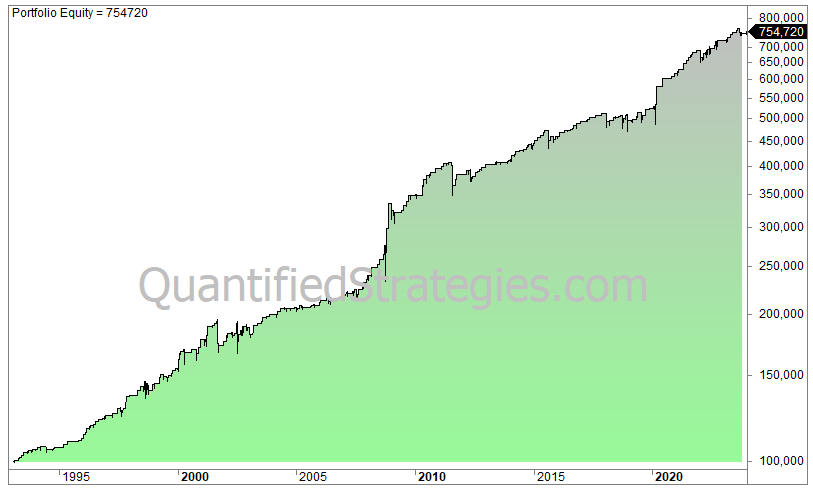
Strategy and performance metrics:
- #trades: 265
- Average gain per trade: 0.8%
- CAGR: 6.8%
- Time spent in the market: 9%
- Max drawdown: 15%
- Risk-adjusted CAGR: 72%
- Win rate: 79%
- Max consecutive losers: 2
- Max consecutive winners: 19
- Profit factor: 2.9
Here you can find more trading strategy bundles
FAQ:
What is volatility trading, and why is it essential in the financial markets?
Volatility strategies focus on the anticipated magnitude of price changes rather than the direction of the market. Volatility trading involves making investment decisions based on the expected level of price fluc