
Combining Long And Short Strategy Bundles Effectively
Let’s look at what happens when you combine long and short strategies. For example, we’ll look at our Strategy Bundle 1 and the Short Strategies Bundle and see what happens when we combine them.
Bundle 1 trades SPY (you can also use @ES), while the Short Bundle trades SPY, XLP, and SMH.
- Strategy Bundle 1 Updated With Charts And Metrics: +18%
- 3 Short Selling Strategies (Trading Strategy Bundles)
We make a backtest with the following trading rules:
- We allocate 100% of the equity to each trade.
- Thus, some overlapping trades won’t be triggered.
SPY has long and short trades, while XLP and SMH only have short trades.
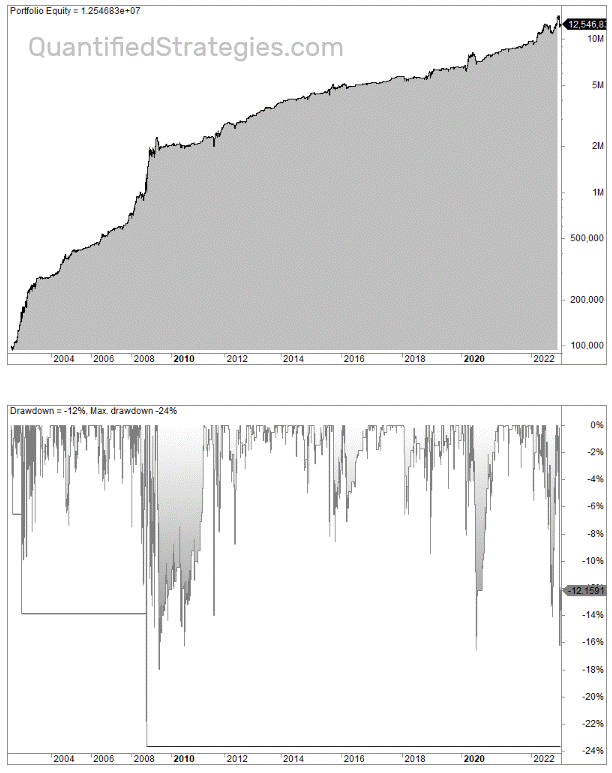
If we combine the strategies, we get the following equity curve (we start in 2002 to get all the ETFs included):
Annual results:
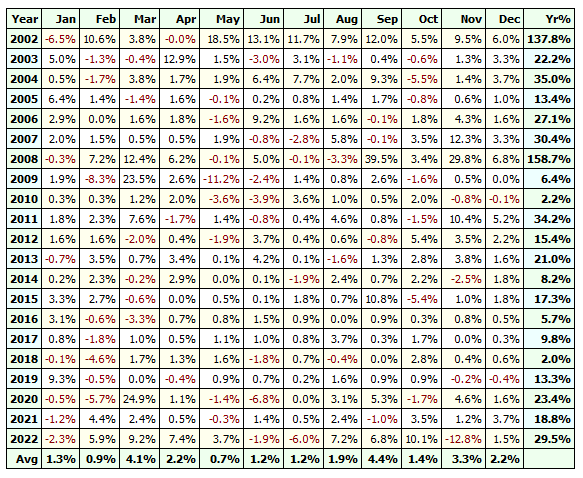
Annual returns are an impressive 25%, but the best period was before 2010. This is the curve from 2010:
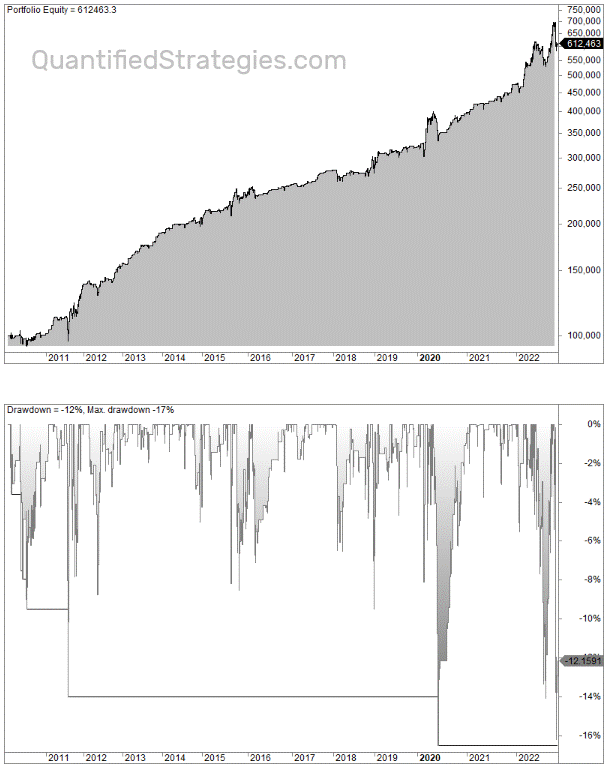
From 2010 CAGR dropped to 15%.
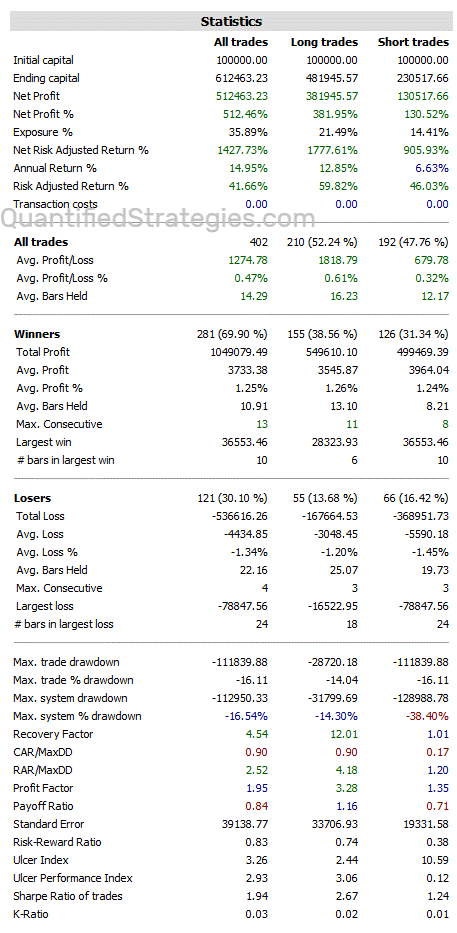
Long and short performance metrics:
FAQ:
What happens when you combine long and short strategies?
Combining long and short strategies involves integrating both buying and selling positions in a trading approach. This can be achieved by simultaneously implementing a long strategy (Strategy Bundle 1) and a short strategy (Short Bundle) on different assets.
How is the backtest conducted for the combined strategies?
The backtest involves allocating 100% of the equity to each trade. It’s important to note that some overlapping trades may not be triggered, given this allocation method. SPY has both long and short trades, while XLP and SMH only have short trades.
What are the annual results of the combined strategies?
Long and short performance metrics include a range of factors such as Compound Annual Growth Rate (CAGR), annual returns, and other indicators. The annual returns from combining the long and short strategies are impressive, reaching 25%. However, it’s noteworthy that the best period was before 2010, with a subsequent drop in CAGR to 15% from 2010 onwards.